systems@work for Android

Share

We’ve just launched our systems@work App for Android mobiles, so (with a little configuration and an upgrade to the central server application) our users all over the world can connect to their company’s systems@work database and submit and authorise forms through their Android mobiles.
Screenshot_20160203-092716

It’s hard to find reliable statistics on relative market share for Android and iOS in the business sector (precisely those who might use time@work, expense@work or forms@work), but it’s clear that Android has won at least half the market, and in some areas of the world, much more than half. When, at a recent LLP Group company get-together, I asked my colleagues which of the two they use, a clear majority put their hands up for Android. A couple rather sheepishly owned up to Windows Mobile, but, with apologies to the two of them, for the moment I’ll ignore that opportunity. And the Blackberry one too.

At least Android phones can be cheap. When we reached the final stages of testing the Android version of systems@work a couple of months ago, I went out and bought myself one for just 40 GBP (with about ten minutes of free local phone calls thrown in to sweeten the deal). It took me some time to get used to the different style, but once I got inside our App it seemed like familiar territory and our App worked just as well. I was able to submit the invoice for the Android phone, as a legitimate business expense, using the App itself just twenty minutes after I bought it. (That’s logically equivalent to driving home a car salesman in the car he’s just sold you. Or something like that.)

Developing apps hasn’t been a painless experience. The problem for App developers is that the technical environment for App software is utterly different for iOS and for Android. And when it comes to Android you have the additional worry that you must make sure that what you’ve developed will work on the most ‘vanilla’ version of the operating system, because Android can be ever so slightly different on different devices. Apple’s iOS, on the other hand, is always the same (barring new versions).

So, App development is expensive. It took us more than a year to finish the iPhone version and around six months to complete the Android one. At least the web services that read and update the systems@swork database are the same for both Apps.

Our App is complex, though very simple on the surface. When you connect it to your systems@work database, it takes the forms that are defined there, and which are always very different for every one of our systems@work customers, and renders them in your mobile, together with all the lookup lists, date fields, numeric fields, and so on. that you need to fill in.

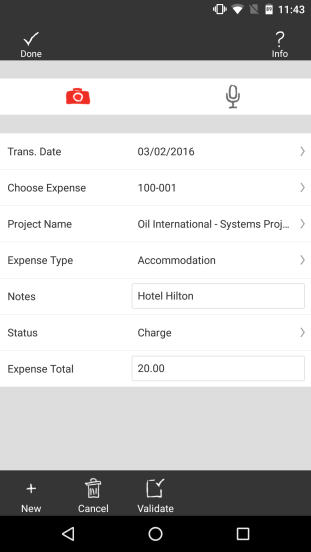
You can have as many forms as you like – for time entry, for expense entry (in local or foreign currency), for mileage calculation (with the distance between two place names or postcodes being automatically calculated by Bing if that’s what you need), for absence requests, for just about anything. You can photograph a receipt (or the Tower of Pisa for that matter) and record a voice memo. When you’ve finished entering data (online or offline) you can upload your transactions, photos and voice memos, to the server, sending forms for immediate authorisation or feeding the data into forms and timesheets that you can finish off in the browser.

Screenshot_20160203-113516

Screenshot_20160203-114309

I dream that one day there might be a single programming language that will work for both iPhone and Android, even if we’d then have to write a third version of our App. Stepan, our development manager, tells me that there’s talk in the technosphere about a new language or development environment called Swift that might solve just this problem. I look forward to it, but not tomorrow.

For the moment, and for some considerable time to come, we’re happy to have launched systems@work for Android as a separate App. It’s functionally identical to the one that works on an iPhone, so we’ll go on developing both in tandem, at least until we’ve finally caught our breath and have the stamina to begin again with Swift,
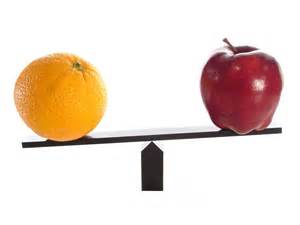
Compare and Contrast – Microsoft and Google

Share

Last weekend we held a company conference in Visegrad, Hungary. It was a mixture of instruction, inspiration, and a drink called Jagermeister.

We are not a large group (LLP Group) but we managed to assemble around 70 of our marketing, sales and consulting staff from seven of our European branches at a pleasant hotel in Visegrad on the Danube for two full days of talks and discussions. Most of our presentations were about ourselves and what we do, but we decided also to step back from the day to day and contemplate the future. So we invited Microsoft and Google to present their visions of how the world will look in two consecutive formal sessions. We were lucky, I suppose, that both took us seriously enough to send a representative.

comparecontrast

Whilst the worlds of Microsoft and Google overlap in some areas (their interest in cloud computing, in desktop tools (spreadsheets, word processing, etc.), in mobile technology (Windows Mobile and Google Android), and in search tools (Bing and Google)), what was surprising about these two giants of the tech-world was how different they are, to some extent in substance, but enormously in style.

First to go was Microsoft. A man in a dark suit from Microsoft’s Dynamics business software division talked about the ‘cloud’. This wasn’t enormously interesting. The future of computing is the cloud, he said, and it sounded like a dull future. It was the usual business PowerPoint presentation, heavily branded with the Microsoft logo, corporate and unremarkable.

The young lady from Google, by contrast, started with a picture of herself and her family and went on to present her ideas (and perhaps also Google’s) in an engagingly idiosyncratic, and almost entirely ‘unbranded’ way. ‘No brand’, it appears, is the Google brand. Be personal, individual, unusual, and cool, is the theme. Bring your family to the ‘table’. Life and work are a continuum. It’s the same message, I suspect, for both internal and external consumption, but we shouldn’t be fooled into thinking it isn’t calculated.

She spoke about how the nature of IT is changing, how devices assail us (well, that’s probably an old-fashioned way of putting it!) in all sorts of ways all day, everyday and everywhere, but that predominantly it’s the mobile device that is determining the way we work and play. IT, even business IT, must live up the expectations of the new generation who spend their time on mobiles. If IT isn’t easy to use it will be forgotten.

I asked her afterwards how she thought this would affect the world of business software. It’s hard to see SAP or accounting systems on mobiles, I suggested. Maybe, she said, but young people don’t want to join corporations any more, they don’t want to be working with heavy-duty old-fashioned ERP, so business software must adapt. Young people have individual, creative, even ‘moral’ aspirations. Google the ‘anarchists’, it seems.

There’s a little truth in this, perhaps. The young are always idealistic. But the business software juggernaut will nevertheless roll on, adapting slowly and painfully to the easier-to-use styles of consumer software. The fact is that business systems become ever more complex, and will always take man-millennia to write and adapt. Complexity isn’t easy to fit into a mobile device.

You might as well say that literary authors must write novels of pamphlet length if they’re to be taken seriously by the next generations. Let’s make things easy, if that’s appropriate, but let’s not dumb down.

So the differences between Google and Microsoft are more about style than substance. Both are, in fact, highly organised and enormous business, juggernauts themselves. The first presents itself as anarchic and individualistic, the second as more sober and business-oriented. Both have been creative (occasionally) but neither can seriously pretend to be anything other than a large well-organised multi-national corporation, disciplined and deliberate.

And neither can Apple. All three of these are highly competitive and meticulously calculated in their moves, Microsoft perhaps driven more by business, Google more by the consumer, but both slaves to their respective markets. True, the consumer and the business worlds nowadays overlap, but there are still some things each company does that are unique. We’re tempted by Google’s cloud-based desktop tools, but they don’t yet have an answer to MS SQL.

When it comes to style, consumer-facing companies need a different image from business-facing companies and both must be careful when they need to face in both directions (note that Skype, largely consumer-facing, isn’t heavily branded by Microsoft as a Microsoft product). But I don’t strongly believe that the capacity of these companies for innovation is a function of their presentation style.

That said, during a separate presentation that I gave on our own systems@work products, I asked my colleagues what devices and what browsers they use. The majority use Android, and the majority use Chrome, so in that respect (and I was surprised), it’s 2-0 to Google. But then we all use Windows on our PCs, and SQL servers for our business applications, and Google doesn’t even compete with these.