95 Today!

My mother is 95 today, and undiminished. Of course, she’s incapable of a marathon, but with the aid of a walking frame, and the motorised buggy she drives around Sainsbury and Marks & Spencer, she’s perfectly capable of fending for herself, as well as providing for an ever-growing menagerie of stray cats – ‘the breakfast club’ as she calls it –  mostly strays on the make who’ve recognised a good deal when they’ve seen one.

Mentally she’s as acute as ever, and as provocative, mischievous and argumentative. She’s an avid reader, a critical viewer of the afternoon soaps, and still up to the demands of University Challenge and Mastermind. If she complains about anything, it is only of the boredom of old age, but there is clearly much to keep her entertained and exasperated.

Dressed for this year’s Easter Bonnet competition.

mother2

Though most of them have chosen intellectual retirement, my mother likes to discuss the political and cultural issues of the day with the other elderly residents of the community where she lives in Salisbury. She’s an outspoken atheist, socially liberal, politically Conservative, pro-EU, refugee-tolerant, and she’s quick, indeed eager, to see dishonesty, self-interest, pretension, arrogance and insincerity in almost everyone in public life. She loved Margaret Thatcher and loathes Tony Blair (at least she has loathed him consistently, whereas I only loathed him after he got started with Iraq). She can’t bear false piety, or affectation. She hates pomposity, and officiousness. She can’t bear whining.

There are also a few things that she likes. She likes animals. She likes poetry and music. Above all, she likes her own country. She has travelled widely, but late in a long life has formed the view that British is always best, whether it’s a matter of gastronomy, landscape, politics, justice, or kindness to animals. Garlic, above all, must be avoided. She likes a drink or two, and would drink a little more if it weren’t that a single glass topples her.

Her low opinion of human nature has led her to see innocence only in animals, and she’s quicker to write a cheque for ailing donkeys than for the conventionally underprivileged human. I differ with her on the question of human nature. She sees the world as a worse place than when she was born: I see it as a better place, and getting better all the time. Animals, as far as I’m concerned, aren’t moral beings capable of good or evil.

My mother was born Grace Evelyn Tizard in Portland, Dorset, on the south coast of England. Her father was a quarryman, her mother a domestic servant brought up in a harsh Workhouse School in north London. She inherited from her mother the conviction that good things only come from hard honest work, and that laziness and luxury sap the soul. I have, in turn, inherited those views. ‘I want never gets’ was the constant refrain of my childhood.

She won a scholarship to Grammar School in the mid-1930s, and joined the women’s Auxiliary Territorial Service when war broke out in 1939. She’d long thought that war was inevitable, and had no time for Chamberlain’s policy of appeasement. She spent the war years calibrating guns and assisting with the development of radar on the cliff tops of southern England and Wales.

In 1944, despite her admiration for Churchill, she voted Labour, for the first and, so far, the only time.  The war years were hard, but possibly the happiest years of her life. As for many women of her background the war was liberating, bringing new, wider possibilities in its train.

mother3.JPG

motheryoung

On demobilisation she studied at a teacher-training college in Cheltenham, and from then until the 1980s she taught at a number of state primary schools. She was a firm but fair teacher and had no problem with discipline.

She met my father, an Army Major, in 1954 and they enjoyed a happy marriage until his death in 2003. She was undoubtedly the more articulate, thoughtful and opinionated of the two, and he the more conventional. Since his death, my mother has expressed her opinions without restraint, and she cares little for others’ opinion of her. If there are those who disagree with her, they must make their case intelligently, and expect to see it demolished if it’s weak. I share her approach on such matters.

She is a woman of strong views. On a good day that can be invigorating. On a bad day…..well, it’s her birthday, so let’s put that aside for the moment.

If she can avoid physical dependency and retain her wits and wit, she’ll gladly live to a hundred. Fingers crossed.

Lovely, but Unelectable

There is much to admire in these three undoubtedly lovely men, all stalwarts of the ‘old’ and principled Labour Party, all unelectable.

tony benn

Tony Benn (1925 – 2014)

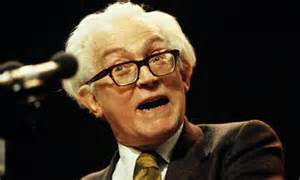
michael foot

Michael Foot (1913 – 2010)

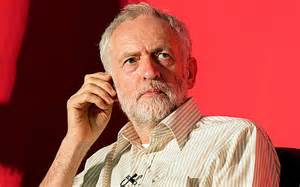
jeremy corbyn

Jeremy Corbyn (1949 – )

Of these three, only Michael Foot has so far led his party into a General Election (1984), losing disastrously with the fewest votes for half a century or more. If the polls are correct then Jeremy Corbyn might soon win the chance to do the same.

Though each is of a different generation, and each came to his radicalism by a different route, all three share some of the same qualities.

  • They’re not in it for themselves (Jeremy Corbyn, for example, claimed fewer expenses in 2010 than any other MP)
  • They care deeply about inequality, poverty, injustice, etc., and oppose it vigorously, seeing Labour’s policy as the best suited to alleviate disadvantage
  • They are anti-establishment and anti-elitist
  • They have a fond belief in the essential goodness of humanity (except perhaps that of ‘capital owning humanity’ whom they see as rapacious and essentially selfish)
  • They believe that state ownership and state intervention are the route to a more equitable and a more efficient society

Michael Foot’s convictions were formed during the conflicts of the 1930s, when capitalism and socialism were stark and incompatible opposites, and when capitalism seemed to tend inexorably towards Fascism (as a young journalist he vigorously opposed the appeasement policies of the Chamberlain government). He was an intellectual socialist, and he stuck to the belief that socialist economics could work. He campaigned throughout his life for nuclear disarmament (even unilateral disarmament) and it was probably Labour’s disarray on this topic that lost him the election in 1984. He was a notably kind, funny, personable, man.

Tony Benn nearly became Deputy Leader of the Labour Party in 1981, but profound influence on the policies of the Labour Party in Government ultimately eluded him. He, too, was convinced of an old-fashioned, ideological, class-warfare kind of socialism. He was happiest in the company of union officials, drinking mug after mug of tea (not for him the fine clarets and champagnes of New Labour). Perhaps, like Marx, he believed that socialism could transform human nature and resolve the conflicts that arise from personal or class interest. He was also a notably kind, funny, personable, man, and, even in his later years, still a man of the people, travelling to Parliament and back by bus.

Jeremy Corbyn is an activist, allied to all the radical (and often admirable) causes of the last thirty years, including nuclear disarmament, opposition to the Iraq War, the extradition of General Pinochet, and many others. He has never been a member of the Shadow Cabinet, and was, during the last Labour Government, the most rebellious Labour MP. He has never been a Party man, and clearly never fed at the Westminster trough. I’m not sure he is as witty, warm and personable as Tony Benn or Michael Foot, but he comes across as an ordinary, soft-spoken, even if passionate man.

But none of these three is imaginable as Prime Minister.

The fact is that there are some truths about the world that in their goodness and idealism these lovely men don’t see. Perhaps it is because they have never worked extensively in the commercial world. Take this passage from Tony Benn’s diary from 1965 (when he was Postmaster General and obsessed with the idea that the Queen’s head should be removed from postage stamps):

This highlights in my mind one of the great difficulties of being a socialist in the kind of society in which we live. The real drive for improvement comes from those concerned to make private profit. If, therefore, you deny these people the right of extending private enterprise into new fields, you have to have some sort of alternative. You have to have some body which wants to develop public enterprise, but our present Civil Service is not interested in growth.

Benn rightly sees ‘private profit’ as an engine of growth, as motivating ‘improvement’, and he’s struggling, in painfully good faith, to come up with a substitute for this in state-owned industry. But he completely misses the point. Private profit leads to improvement only if there’s competition (it doesn’t work if there’s a private monopoly). Competition is the point, not profit. Profit is the means, not the end.

This point, blindingly obvious to most of us, just doesn’t occur to this well meaning, but naïve and, in terms of practice, inexperienced man. Yes, it’s certainly hard to see how competition can be fostered within or between state-owned enterprises. The shabby unproductive factories of Eastern Europe are witness to the lack of it. ‘Growth’ and ‘improvement’ cannot be directed, even by the best motivated Civil Service in the world, or by the most well-meaning Government. Benn seems to know that something is lacking, but doesn’t see what it is.

And all three of these lovely men are still devoted to the old class-war rhetoric that talks of ‘working people’ as if these are still the oppressed. exploited manual labourers toiling in mines or in Satanic mills. They forget that capitalism isn’t any longer unfettered (and never should be), that there’s the national health service (which could be better), there’s free education (that could be better), there’s a minimum wage (that could be higher), and myriad health and safety regulations that protect the ‘worker’ (whether struggling with a machine or at a call centre) from the mercilessness of capitalist greed. And they forget that everyone, whether ‘worker’ or not, aspires to better his or her lot. Whether you believe that the balance should be tipped more in favour of the disadvantaged or not, there’s no class war being fought, is there?

Admirably, none of them has the slick establishment gloss of the career politician, the pragmatic, non-ideological, unprincipled, deal-making skill that the likes of Tony Blair, David Miliband, David Cameron, even Ed Miliband and Gordon Brown possess.

But what do we want our politicians to be? Good men, unsullied by the realities of the world, averse to compromise, certain of their mission and clearly principled? Or realists?

There is currently a global, certainly European, aversion to establishment politicians. Conviction politicians, and anti-establishment parties of both the left and right are winning the votes of the disaffected, whether old or young. Syriza, in Greece, is a case in point. But what are the realities of power? Alexis Tsipras has, finally, been forced to accept a deal that is worse than the one his people rejected earlier in a referendum.

Labour party members or affiliates must ‘get real’. Unhappily, I agree with Tony Blair, that Jeremy Corbyn would be another disaster for the Labour Party. As Gordon Brown said yesterday, the Labour Party must be credible, radical and electable.