Seven Days of Solitude

A hundred years would be too many, but I must admit that I look forward to seven days of solitude, bicycling in the Carpathian basin from Kecskemet to Belgrade. Just yesterday I was engaged, with my partner, in manufacturing cucumber sandwiches for thirty guests at a summer music party in Prague, as well as two kinds of chicken, baked salmon, Elin’s beetroot and apple salad, roast squash, Caprese, beans, and so on (see Outcooking Julie).

The host insisted on a proper English tea, with chocolate éclairs, lemon cake, Victoria sponge and shortbread biscuits, as well as mounds of cucumber sandwiches, though he rather spoiled things by offering champagne as well as three teapots of  Marks & Spencer’s Gold Blend.

As it happens, I’d never before made that insipid classic of the British tea table, and though I consulted widely on the web, I don’t think that my first attempt was perfect. Everything needs to come together – salted, drained and finely sliced cucumber, firm white bread, and butter soft enough to spread and seal. I added a dusting of mint and provided a separate plate of cucumber sandwiches with Marmite, to amuse the British. I kept them waiting – the sandwiches, I mean – for no longer than an hour. But they were all gone in forty-five minutes, so I must have got something right, even if they were structurally insecure and wouldn’t have passed muster at the Ritz.

IMG_3199

And whilst the guests were entertained by the distinguished pianist, Jordana Palovicova and the distinguished baritone, Jiri Polacek (regaling the guests with Schubert, Beethoven, Chopin, Sibelius, Debussy and Rogers & Hammerstein), the tea had to be swept noiselessly away to be replaced by a savoury first course, and then during another forty minutes of classical music, by a heap of desserts. The party began at four, but it took the host’s oboe playing to drive the guests to their beds. The last left at ten, but the host insisted on clearing and tidying before bed, so I had only four hours sleep before waking to catch the 7.52 to Budapest from Prague.

Nyugati Palyaudvar

IMG_3205

Of course, it’s not quite solitude. I carry my phone and PC and will be in touch by voice, text and email with all my worlds, but bowling along those splendidly flat roads across the puszta, with the wind at my back, and no risk of drizzle, I shall feel free.

I reached the market town of Kecskemet (named after a goat) at about eight this evening, by train. It’s a lovely town, but a stroll and dinner on a terrace do it justice.

Admire the Town Hall by Odon Lechner, Hungary’s most famous Romantic Nationalist architect.

IMG_3207

Tomorrow, Szeged (capital of paprika), via Csongrad.


Music and Dignity

I love to see pianos played in public places, and, of course, other instruments too. Over the last few years I’ve seen more and more pianos, some of dubious quality and provenance, in railway stations and airports.

On Saturday I saw someone play jazz (very well) on a piano at Avignon station, and later a teenager practising a chromatic scale (very badly) at Charles de Gaulle airport. And when I was last in Sofia I admired this lonely, unplayed Steinway and its incongruous ‘piano stool’ at the airport, but sadly, there was nobody to play it, and no one, I think, would want to hear what I can do.

sofia piano

Live music, wherever it is, in the concert hall or the departure lounge, is always preferable to the piped variety. I’d put my own Bluthner grand piano in the street outside my apartment if only I could get it through the window. It would probably get more playing there than in my living room.

People often think that classical music should be played with a special kind of dignity, in sombre, old-fashioned, uncomfortable, expensive clothes, in sombre, silent, sepulchral halls. We forget that it’s ‘entertainment’, by which I don’t mean that it isn’t serious or intelligent. It’s entertainment because it’s played for, or to, an audience, and audiences can be found anywhere.

Most of the time classical music is played as if it’s a ritual, whose moves are known only to a few initiates, and as if its practitioners are unapproachable high priests, even Gods, remote and full of dignity. It’s usually played in sterile ‘laboratory’ conditions, in an inert and unvarying atmosphere, where performers and audience are set decisively apart. Heaven forbid that you should clap at the wrong time or show too much emotion as you sit and absorb what the musicians are doing in front of you. Small wonder that when this is the prevailing style, audiences are sparse, and elderly.

Why should we listen to music in just one way? We eat in restaurants, on the street, at home, even at 30,000 feet. Every new location adds something different to the experience. Food tastes different in the open air. A Beethoven sonata, taking us by surprise on the concourse of a railway station, comes at us in a different way, catches us in a different frame of mind. And for the performer, too, it can be exciting to play for different audiences in different places. Why should the experience of performing and listening be confined only to a few locations?

Classical music needs to be stripped of its excessive dignity. At its best it’s an informal, warm, living, exciting, entertaining, even challenging, activity that’s performed by people for people, the one lot ‘saying something’ to the other, and the other responding with appreciation, delight, or sympathy. Music, at least in the form of singing (or howling!), was probably the precursor of speech. Music is communication of an elemental kind.

The fact that music is entertainment doesn’t mean it can’t be serious. I mean ‘entertain’ in the broad sense of capturing the attention of an audience. In this sense both Hedda Gabler and Absolutely Fabulous are entertainments. Seriousness needn’t be pompous, needn’t be surrounded by too much dignity. You can play Beethoven just as well in blue jeans as in a dinner jacket.

When I played my oboe regularly in amateur orchestras in London in the 1980s we often performed in busker venues, such as in the piazza at Covent Garden, and these performances were as serious, and as much fun as any in a concert hall. Never mind that some people came and went, that others stayed, that the applause came at the ‘wrong’ moments, I’m sure we said as much as we ever said in the frigid conditions of the concert hall.

So, I love the pianos that we see in public places, where the public are invited to perform any music that comes to mind. Sometimes it’s jazz, sometimes (too often) it’s Fur Elise, and sometimes it’s deeply serious music. When my nephew Frederic played some Chopin at Herne Hill Station in London, a small crowd gathered and applauded. I would love to come across Alfred Brendel or Andras Schiff playing at St Pancras station or on this Steinway at Sofia Airport. I hope that they could dispense with the dignity they’re used to.

But, for some players, music is so special that it’s no longer part of life. It’s something separate, dignified, dead. There’s a young pianist I know in Prague who takes himself too seriously. He’s good, and has played as a soloist with many famous orchestras. Though he has a magisterial way with Brahms, he’d be a happier man if he could lighten up a little. I invited him to my annual Christmas Party, which is also a Birthday Party for my partner. As I lit the candles on the birthday cake (a little the worse for drink, I will admit), I asked him, on an impulse, to play ‘Happy Birthday’ on the Bluthner grand. I knew immediately it was a faux pas of colossal proportions. He actually shuddered, as if I’d put something nasty under his nose. Too much dignity!

If Leonard Bernstein were my guest (sadly, he never will be now, because he’s dead), I wouldn’t even need to ask. It would be difficult to get him to stop. Music infused every moment of his life, not just those moments in the concert hall, and he didn’t give a damn about dignity.

Category Errors – Forcing Niceness on Things

Given Poland’s history of pioneering mathematical logic, it came as something of a surprise to come across a serious category error during my brief brush with the country when I flew last week from Sofia to Prague, via Warsaw.

A ‘category error’ is a philosopher’s way of identifying a particular type of nonsense, the ascription of an attribute to something to which it cannot in fact belong. ‘Readable grass,’ might be an example, or ‘friendly eggs.’

As Wikipedia puts it: ‘A category mistake, or category error, is a semantic or ontological error in which things belonging to a particular category are presented as if they belong to a different category,[1] or, alternatively, a property is ascribed to a thing that could not possibly have that property. An example is the metaphor “time crawled”, which if taken literally is not just false but a category mistake. To show that a category mistake has been committed one must typically show that once the phenomenon in question is properly understood, it becomes clear that the claim being made about it could not possibly be true.’

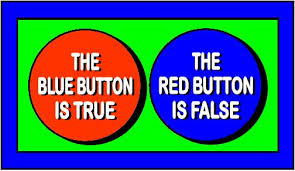
A contradiction is another kind of nonsense, I suppose, but I like this illustration anyway and I can’t find an image that aptly illustrates a category error.

Contradiction

It was a miserable late afternoon in Warsaw. The cloud base was a mere ten metres above the tarmac. It was a relief to get down safely.

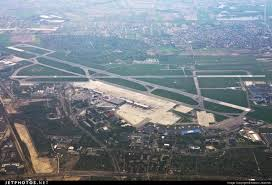
‘Welcome to Frederic Chopin International Airport, Warsaw’ the pilot said.

And that was it, in case you missed it. That was the category error.

I think of the Nocturnes – wistful, romantic, delicate, nostalgic – and then I look at the grey slabs of concrete, the ugly terminal buildings, the machines, the dirty snow. Naming the airport after Chopin will never make it nice. Listen and look.

Nocturne Opus 20 in C Sharp Minor

chopin