
My dear friend Jane Norman died a year ago yesterday, on the day after the UK’s 2015 General Election. I was working on the Parliamentary expenses system that week, preparing for the upcoming Parliament, getting ready to erase the losers and import the winning MPs into the system. Jane’s godson called to tell me she’d been admitted to hospital with severe pneumonia and it was thought she was unlikely to survive. She’d been seriously ill, and in and out of hospital for several months.
The systems work at IPSA was largely done, so I was able to abandon my post to be with her as she died. She was very much herself to the last, and I still miss the fun and the fury she brought to the world, even during her last moments. She was always either for something enthusiastically or against something, viscerally – there was nothing in between.

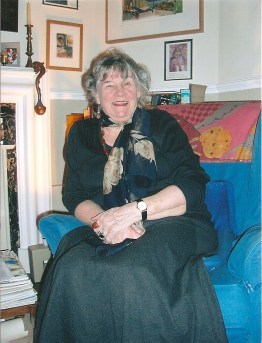
I spoke at her funeral, and in memory of her wonderful spirit, I repeat those words today:
I first met Jane about 35 years ago when I was living with her close friend, the stage designer, Michael Annals. Michael had arranged to look at a derelict lighthouse in Dorset with a view to exiling himself from London and its temptations, so the three of us piled into Michael’s tiny orange Datsun for a daytrip to Dorset and back.
Picture: Jane Norman & Michael Annals

When we met for the first time Jane struck me as what my mother might call ‘actressy’. Indeed, for one horrific moment I thought she might be Glenda Jackson. But whilst my mother wouldn’t have meant the term entirely kindly, Jane’s way of making every moment more colourful, more dramatic, and more enjoyable, attracted me immediately, and I have loved her for it ever since.
Whether it was her work in the theatre, as administrator, costume and props maker, that made her what she was, or whether the theatre was a natural home for her personality, I shall never know.
Whilst she may have been theatrical, there was no posturing about Jane. She felt things intensely and expressed her feelings about them directly, immediately and with startling honesty. She was always authentic. She was always deeply curious about her friends, too, about why they did this or that, and what they ought to do instead, but she was almost equally curious about strangers, seeming to know them and pronounce judgement on them instantly. ‘That man has a beady eye,’ she might say, if she took against a perfect stranger.
Picture: 80th Birthday Celebrations

Jane’s talent for friendship enlivened all our lives. She was warm, supportive, loyal, loving, entertaining, honest – and explosively critical, too, if we fell short. Never black and white, she was always filming in technicolour.
Picture: Jane Norman and her best friend, Antonia Pemberton

On her last morning, in hospital, when her godson Dexter, her friend Antonia, and I were at her bedside, she made it clear that she didn’t want to go on. But she still needed to know whether Ed Miliband had won the General Election for Labour. ‘Sadly no,’ Antonia said. There was a pause as she took the news in. Then, ‘Fuck,’ she said with all the strength she could muster. It raised eyebrows on the ward, but it was a wonderful and entirely typical exit.
We all miss Jane’s warm enthusiasm for life, and, from time to time, her incandescent fury too.

 Adam Bager