
There are large parts of the world where many of those of moderate wealth, and all of those of great wealth, have acquired their possessions questionably. In such places bling abounds. If there are ‘expensive’ restaurants for business visitors or tourists they tend to be decorated brightly, opulently and ostentatiously, with the undiscerning, and undeserving, rich in mind. They are peopled by fat-bellied, swarthy gangsters, shouting into their mobile phones, blowing cigarette smoke with arrogant abandon and largely ignoring their blonde and leggy molls, who look on vacantly, even anxiously, uncertain of their tenure.
Such was Sofia some fifteen years ago, and such is Moscow still, and probably Almaty. If you weren’t wearing Gucci, or Versace, and weren’t dripping with ill-gotten gold, you were consigned to a table in a dimly lit corner of the restaurant, to be served, eventually, by reluctant waiters, and glanced at with sneering pity by more profligate and better-tipping oligarchs.
I feel a great nostalgia for such times. There was an edge to travel in the newly free democracies of Central and Eastern Europe that has been lost to normality. It was an adventure. Now it is merely a pleasure.
I’m in Sofia for two nights on the first leg of a four-country tour of LLP Group’s offices in Bulgaria, Romania, Hungary and Slovakia, before returning to my home city of Prague, and then on to the UK for Christmas with my mother. I’m travelling not on a Santa-style sledge, drawn by flying reindeer decked out in our company’s colours, but by low-cost airlines, which take me through two additional capitals, Belgrade and Berlin. If time permits I might also make a detour to Vienna on Sunday, since I have designs on Demel, the great Viennese café and cake shop, who make the best stollen and gingerbread in the world. I need stocking fillers for Christmas.
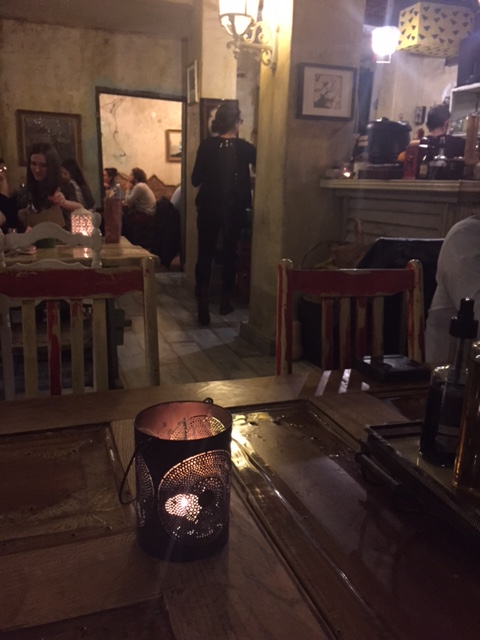
The purpose of my tour is unambitious and largely gastronomic. I take my colleagues out to lunch or dinner. I bestow Christmas goodwill, and listen to their woes and joys. Yesterday I took my Bulgarian colleagues to my favourite place in Sofia, the entirely bling-less Made in Home, a restaurant that is the antithesis of gangsterism, ostentation and tastelessness. The blingy rich wouldn’t even be seen dead there, though, aware of it or not, they’re far more likely to be seen dead at the places they do frequent. Its décor comes from grandmothers’ attics, bizarrely juxtaposed with original modern paintings and prints. Its chairs are a mismatched collection from the last ten decades, and your table may well have been made from a door. It’s cosy, friendly, inexpensive, and peopled by people of all kinds, none of them eager for display, and the food is absolutely excellent. It is the kind of place you might find in New York, London, Tel Aviv, or Paris, but that’s not to suggest it’s bland.
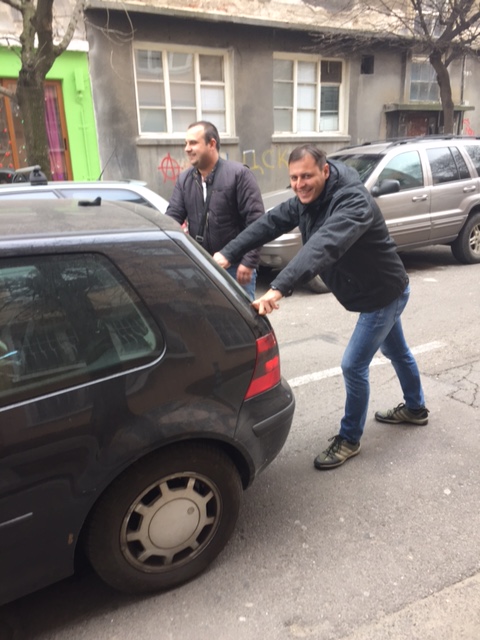
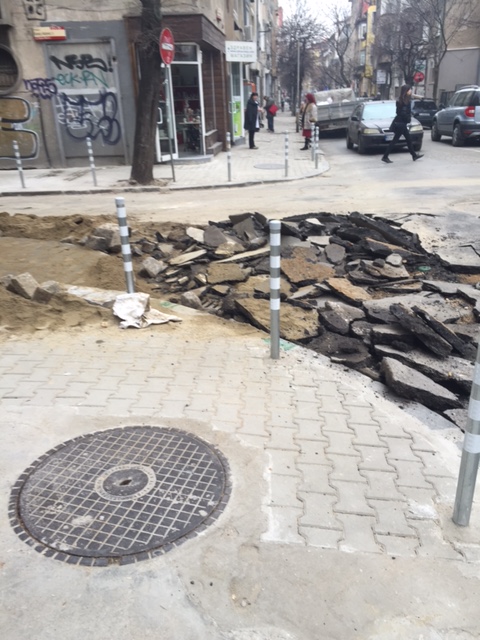
We booked a table for 12.30 and although we set out from the office at 12.15 we were lucky to arrive before losing our table. Traffic in Sofia is appalling, made worse by breakdowns (see my colleague Stoyan removing an overheated car from our path) and by road works. Sofia, one of my favourite cities in Eastern Europe, is still being remade.
We enjoyed an excellent lunch, choosing from a menu that included Bulgarian as well as ‘international’ dishes. The emphasis is on vegetables, but you can also eat fish and meat. It was so good I returned, alone, for dinner, and ate the zucchini patties with yoghurt all over again.
 Adam Bager