
When I was sent by my employer as a business systems consultant to Hungary in the summer of 1987, the more mischievous amongst my friends put it about that I’d been dispatched on Her Majesty’s Secret Service to bring an end to Communism in the Eastern Bloc. It’s true that a manufacturing control system, properly implemented, is a formidable weapon, and perhaps it really was the efficiency that our system brought to the Videoton Television Factory in Szekesfehervar that was the last straw to break the Soviet camel’s back. In any case the unpredicted revolutions of 1989, which I witnessed merely as a bystander, did little to dispel the myth of my clandestine involvement.
In fact I possess most of the qualifications you need to be a British secret agent: ten years of private boarding-school education; three years at Oxford (the Uni not the Poly); an unwavering faith in democracy and the Rights of Man (and of Women, too, if absolutely necessary), tempered, of course, with a sense of the majesty of monarchy; a superb physique; a sneering disdain for oligarchs and other kinds of villain; a complete indifference to personal discomfort, tempered with an occasional taste for luxury, especially if enjoyed at others’ expense; a dapper manner in a dinner suit; enormous physical courage; a sneering contempt for aggressive tax avoidance and its evil twin sister, evasion; a dislike of petting on the football field; a laconic wit; and a capacity for sudden and explosive violence. I could go on, but these are surely qualifications enough. Perhaps I fall a little short in the ‘Bond girl’ department, but I understand that’s never been an impediment in the Service. Far from it.
I’m not a fan of the vodka Martini either, my tipple being tea, as long as it’s not Darjeeling. So if we need a little catchphrase it’s more likely to be ‘neither one lump nor two, my dear’ than ‘shaken not stirred.’
Sadly the call has never come, though I did once fall under suspicion on a train between Budapest and Bucharest, and was questioned at length by a sneering man from the Romanian securitate. He was as eccentric and villainous a villain as you’ve ever seen in a Bond film I threw him out of the window.
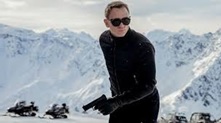
So where would be a more appropriate place to ski, this year, for a secret agent manqué, than Sölden, where parts of Spectre, the last James Bond film, were made last January. In retrospect I’m sorry I missed the chance, a year ago, when I was last here, to make progress with my project of putting the timesheet at the centre of the next Bond film. If you remember, I wrote to Barbara Broccoli, the producer of the Bond franchise, last summer, with an offer of a product placement for time@work, and I included some snappy dialogue to make our timesheets feel natural, free of charge. I thought it an imaginative and generous offer, but I’ve yet to receive a reply (see Bond, Where is that Timesheet?!).
Sölden is completely Bond mad this year, and you can even buy a Bond-branded ski-suit, complete with replica handgun, at the better sports outfitters in the town. I couldn’t resist the temptation. Here I am, in action.

I enjoyed Spectre, though I felt it lacked the sentimental realism and emotional pathos of Skyfall. I particularly enjoyed the larger part that Q played in the drama. It’s more about brain than brawn these days, when it comes to thwarting arch-villains bent on global conquest, so I shan’t really mind in the least if Ben Whishaw manages gradually to steal the limelight from Daniel Craig.
Daniel Craig as Bond
Ben Whishaw as Q. (He’s the nerd for me!)

And just a quick note, Ms Broccoli, in case you’re reading this. If you’ve a bit part for another action hero (with brains) in the next Bond film, then you may well find that I’m available. I’ll await your call.

 Adam Bager