Hockey on Ice

The majority of competitive games were invented by the British: football, rugby, tennis, badminton, ping pong, hockey, golf, lacrosse, cricket, snooker, rounders, baseball, polo. You name it, we invented it, or wrote down the rules.

British Inventions

Not that I’m suggesting that the British are Best. Far from it. Other nations had far better things to do. Whilst the British were playing ball games in the drizzle, others were doing more important things: the Italians were making love, the French were eating frogs’ legs, the Russians were drinking vodka, the Germans were doing things with cabbage, and the Czechs were making dumplings.

So it’s odd, this week, to be in a city where the citizens have gone mad about a game that the Brits don’t play – Ice Hockey. Actually, I have to admit that they simply call it ‘Hockey’ here, and refer to the lovely game we play on grass as ‘Field Hockey’. Ice hockey is a brutal, high testosterone game played with a black rubber lozenge called a puck. It’s not for gentlemen. The best at it are the Russians,, the Czechs, the Swedes, the Finns, the Americans and the Canadians, and they’re fighting it out in Prague and Ostrava for the annual World Championship.

hockey crowd

So the streets of Prague were empty last night as the Czechs played the Finns in the quarter finals, from time to time the pubs erupting with raucous cheers, presumably for the Czech team, who won 5-3..

The problem is that the O2 arena, where the biggest matches are held, is the building our office overlooks, so our working day is punctuated with the bellows of the crowds, the amplified shouting of the commentators, all broadcast to a big screen just beneath my window.

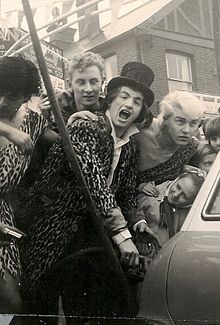
But, if you can’t beat them, join them. Everyone is wearing the padded shirts and armour that go with the game, whether players or supporters, so this is how I’m going to work today.

ice hockey

Correspondence Accounting – The Russian Way of Debits and Credits

Share

Have you ever heard of correspondence accounting?

If you’re not an accountant, or financial systems consultant, stop here. And if you’re an accountant and you’ve never had to debit or credit your accounts in Russia or the Russian-influenced world then you won’t need to know about this either.

Correspondence accounting is the Russian way of accounting, and it’s the bane of ‘Western’ financial accounting systems and of companies like mine, since we struggle to make the systems we sell work in Russia. My company, LLP Group, works with SunSystems, a British-born financial system that works more easily than most systems almost anywhere in the world  Indeed, we’ve implemented SunSystems for international companies in the USA, South America, Asia, Africa and Europe, ensuring a consistent view of finance even if local rules differ markedly.

But Russia is more difficult (any surprise?), and I write this in the hope that someone can tell me WHY!

Most accounting systems have a chart of accounts that lets you debit and credit to any series of accounts as long as you end up with a balance of zero. So you might do this for a sales invoice:

DEBTOR          1,000   D

SALES              800 C

TAX                   200 C

You can have any accounts in your journal, and any number of them (two credits and one debit in this case) as long as the final journal balance is zero.

But in Russian correspondence accounting each debit must be matched by a credit, and the two accounts involved must ‘correspond’. Indeed, the state issues a list of accounts that are permitted to ‘oppose’ each other. A Russian journal would look like this:

DEBTOR                1000 D                    SALES                 1000 C

VAT ON SALES    200 D                      VAT                      200 C

Each line, debiting a single account and crediting a single account must balance.

Most financial systems can imitate this style of accounting by imposing constraints on the way traditional journals are structured, but the real difficulty arises when you try to construct your statutory reports, since these rely on the corresponding account being known for every debit or credit. There’s even a kind of cross-reference report, a vast table, showing the values that have been posted between corresponding accounts. Statutory auditors, when not soliciting bribes, need only glance at this table to determine if the rules have been broken, and if fines are therefore due.

auditors

A small team of Russian auditors

All this is possible in ‘Western’ financial systems and in our company we’ve worked out a method that makes it possible. But it means that implementation time is longer and more expensive.

What is it all for? Who benefits? What possible management benefit comes from all of this? What statutory benefit?

Can someone tell me?!

And then there are ‘negative’ credits and debits!

What’s Information?

Information can have a very academic definition (just take a look at the Wikipedia entry on the term – Information), and I’ve no doubt it keeps some kinds of philosophers exercised, but it’s also a term at the centre of the occasional legal dispute.

information

There’s an interesting case raging at the moment (‘raging’ might perhaps be an exaggeration!) as to what constitutes ‘information’ under the Freedom of Information Act in the UK.

IPSA (the Independent Parliamentary Standards Authority) is in charge of checking MPs’ expenses and determining if they are justified in respect of MPs fulfilment of their Parliamentary duties. You will remember that some years ago a few MPs were found to be putting forward expenses that would nowadays be difficult to justify, such as the cost of cleaning a moat.

As a result of those scandals all MPs’ expenses are now published for the general public to review. They are made available through a website but, crucially for this case, without images of the original invoices and receipts that MPs present to IPSA, so the public can’t see the additional text, or logos, that might also be found there. Expenses are published in summary form, presumably containing the ‘information’ that IPSA believe is relevant for justification.

IPSA’s Publication Website

Some years ago, a journalist from the Daily Telegraph asked to see copies of original receipts and invoices and IPSA turned him down. The Daily Telegraph then appealed to the Information Commissioner, who ruled that IPSA should provide the copies he asked for. IPSA, in turn, appealed against the Commissioner’s ruling twice and the case reached the Court of Appeal a month or two ago.

Now, finally, the Court of Appeal has ruled in the Information Commissioner’s favour. Their view (detailed here) seems to be that ‘information’ means more than just a summary published electronically. It also means logo, layout, additional text, or handwritten notes on any invoice or receipt provided to IPSA by MPs, the kind of information that could only be obtained from examining a copy.

They make use of a general distinction between ‘information’ and the ‘record’ that contains it. The sheet of paper on which a receipt is printed, is ‘record’, the printing on the paper is ‘information’, but they also acknowledge that the distinction is not an easy one to make. The physical properties of the paper are properties of the ‘record’ but logos, layout and additional text, whether printed or handwritten, are ‘information’, especially if they influence IPSA’s judgement as to the genuineness of a document and therefore whether it is a justifiable expense. IPSA are obliged by law to publish information but not the record itself. Thus original documents need not be made available, but electronic copies must be.

This may seem like a scholastic and academic debate, but the implications of this ruling on information publication in general are huge. Philosophers (of a certain kind) would probably reject this exercise of meticulous definition as bound to fail, and would challenge the separation of ‘record’ and ‘information’. They would point to the struggle to place a property in one or the other category as symptomatic of its ultimate uselessness. True, in the digital world, where ‘information’ is carried by 1s and 0s it’s easy to see the separation, but in most contexts it’s not. Try defining any concept precisely in another form of words. Try ‘chair’.

It would make better sense to frame the law in terms of purpose, but I am no lawyer so there may be insuperable difficulties in doing so. Better to say that the Freedom of Information Act requires that everything should be disclosed that can reasonably be held to bear on the decisions or judgements made, which will differ by context and the purpose of the Government body. This way there need be no debate about the meaning of information. Even matters which their Lordships regard as related to ‘record’ rather than ‘information’, such as the weight of paper, might be relevant in judging the authenticity of a large invoice.

As all parties have discovered, it’s difficult to come up with the precise definition of a word without reference to context and purpose. ‘Information’ is a matter of what you do with it.

See the Guardian’s reporting of the case here.

An App for the Altruist

How much time do you spend on your phone doing something for other people? Not much, I suppose. I don’t.

Apps for News, Gaming, Emails, Dating, Shopping, Travel, these don’t benefit mankind directly.

eyes

But, actually, there are some altruistic Apps out there. A friend of mind came across a wonderful one the other day called Be My Eyes. It’s an app that connects blind people with volunteer helpers from around the world via live video chat.

Be My Eyes

Try it. Volunteers currently outnumber blind users, but you might still get the call.

Behind the scenes – expense@work at IPSA

Share

I’ve just returned to Prague from London, where I and my colleagues played a very minor role on the fringes of the UK’s General Election, helping to prepare expense@work, our expense management software, for the new intake of MPs and for the management of Winding Up expenses for those who were defeated or are standing down.

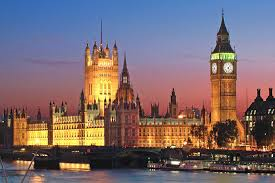
parliament

This was a good test of the design we implemented five years ago for the then new statutory body, IPSA (Independent Parliamentary Standards Authority), which was set up to prevent any repetition of the scandalous abuse of the House of Commons’ former expenses regime. We had to come up with a design capable of expansion, extension and modification of the rules.

We originally implemented expense@work in just six weeks, following publication of the new MPs’ Expenses Scheme. It was the most intense and exciting system implementation project I have ever worked on. and we went live just in time for the new Parliament in May 2010.

expense@work has worked well over the last five years, tracking MPs’ expenses against budgets for staffing, office costs, accommodation and travel expenses, capturing and storing images of invoices and receipts.

The rules are complex, taking account of each MP’s family circumstances, the location of their constituency and their choice of main residence (London or constituency). And expense@work must work with payment cards, stationery retailers, travel websites (such as Trainline) and enable automatic validation against the rules at every point of entry. Workflow must ensure multi-level authorisation procedures where appropriate, and must enable export to IPSA’s public website:

IPSA’s Publication Website

Every year the rules change a little, so the last few days have been about simplification as well as managing the election process. We closed down the system on Wednesday at lunchtime and were ready for the MPs on Friday morning, however bleary-eyed they might have been after a long night of victory or defeat.

Whither Socialism?!

The results of Thursday’s election in the UK took us all by surprise. None of the P’s predicted it, neither pollsters, nor politicians, nor pundits. As the exit polls came in and the final results were predicted, political leaders vowed to eat their hats, or their kilts, if they were right, and now they must make good on those promises.

To my mind there was only one interesting surprise, the Labour Party’s failure outside Scotland.

That the Scottish National Party did well was no surprise at all. It was accurately predicted. The Referendum on Independence had energised politics in Scotland and Scottish consideration of Scotland’s interests. But I hope that the rejection of the Unionist parties doesn’t mean that Independence is the goal of all those who voted SNP.

The shocking collapse of the Lib-Dem vote (to which I would have added my own if I were not disenfranchised by 15 years’ residency outside the UK) was predictable, if not its appalling extent.

UKIP polled more or less as expected, and, unjustly, won only a single seat.

The real surprise was the failure of Labour. After the left-centrist politics of the Blair years, and encouraged by the Unions (whose influence won Ed Miliband the party leadership), the Labour Party moved consciously to the left, towards the ground it occupied in the 1970s and 1980s, both in policy and in language. Ed Miliband’s rhetoric, no doubt milder and more digestible than that of his Marxist intellectual father, was still based on an academic vision of class war, of the proletariat asserting its power. He saw the financial crisis of eight years ago as the predictable result of unfettered capitalism, a manifestation of its theoretical evils ,to be improved, if not entirely replaced by a socialist economic system designed in the university laboratory. New Labour’s cool about people becoming filthy rich as long as they pay their taxes, has no place in Ed Miliband’s emotional palette.

EdM

This old-socialist model is the prism (red and dead) through which Ed Miliband sees the world, but I suspect it’s not a vision that appeals to the ‘working families’ of today to whom he repeatedly referred in his speeches (though, who are they?). In reality he’s no more comfortable having tea with the ‘working classes’ than David Cameron, though I fancy Dave can eat a hamburger more elegantly. But I don’t think the geeky academic other-worldliness lost him the election, rather an ideology that doesn’t make sense any longer, that doesn’t chime with how people see themselves, and that can’t be applied to the economy we live and work in.

Of course, socialism can be a good thing, even without the Marxist theory. Let’s regulate capitalism, but not replace it. (To her credit, Margaret Thatcher saw that what ‘working people’ want is not class war, but a share of what the richer folks have – property and possibility. Fairness, not collective ownership.)

Whither Sociialism?!

Ed is now out, so what comes next? I’d suggest the Party put aside Das Kapital, but take some account, instead, of Thomas Piketty’s Capital in the Twenty-First Century. There’s a good argument to be made that inequality is a danger in itself. So, keep the proposals for an asset-value-oriented Mansion Tax, abolish the Non-Dom status, keep bashing down the walls of privilege and exclusion, don’t pander to xenophobia, but don’t be the Party of ‘working people’. Forget class. Take the vision and argue the case with everyone. The Labour Party needn’t be the party of ‘working families’ alone.

As for a new leader, jump a generation. Don’t choose between the Blair-ites and the Brown-ites. Choose someone new. I’d vote for Chuka Umunna myself.

chuka

And as for the SNP, whoever rules must now bow to the pressure for devolution. It’s fair that Scotland is asserting its own interests (I’m sure it’s that sense of making Scotland heard in Westminster rather than the ‘progressive’ aspect of Nicola Sturgeon’s policies that won the SNP their seats). But let’s keep the Union. Don’t let legitimate regionalism mutate further into toxic nationalism.

Why didn’t anyone foresee what was going to happen? Why were there so many ‘shy Conservatives’, saying one thing to the pollsters and then doing another? Could it be because Labour misguidedly puts itself forward as the ‘moral’, rather than the ‘pragmatic’ choice, and that we tell the pollsters how we would like to vote, not how we will.

Socialists don’t accept human nature as it is (Marx supposed that it could be transformed through Socialism). They have a generous but unreal idea of our human capacity for altruism. When we get to the ballot box we usually vote in our own narrower interests. At that moment, in private, we vote as we are, not as we would wish to be. The new Labour leadership must recognise that.

Election Day – It’s Loony Time

We try not to take things too seriously in the United Kingdom. Today is election day, and the last six weeks have been intense, both for the public and for those seeking election to Parliament, so some light relief is due.

Light relief has so far derived from the ludicrous antics of the party leaders and the candidates themselves – Ed’s Pledge Stone (see Ed’s Stone), Dave’s plan to make tax rises illegal – but now that the dreadful day has dawned, it’s worth mentioning the Official Monster Raving Loony Party, who are this year standing in 16 Parliamentary Constituencies.

omrlp header

The candidates:

  • Howling Laud – Uxbridge and South Ruislip
  • Baron Von Thunderclap – Mid Sussex
  • Johnny Disco – Wythenshawe and Sale East
  • Peter E. Hill – Louth and Horncastle
  • Nick the Flying Brick – Doncaster North
  • Nicholas Robert Blunderbuss Green – Kenilworth and Southam
  • The Dame Dixon – Hove and Portslade
  • Mad Max Bobetsky – North East Hampshire
  • Mark Beech – Aldridge and Brownhills
  • Ann Kelly, The Mid Bed Minx – Mid Bedfordshire
  • Baron Barnes Von Claptrap – Gower, South Wales.
  • Mad Hatter – Oxford East
  • Mad Mike Young – Sittingbourne and Sheppey
  • Hairy Knorm Davidson – Faversham and Mid Kent
  • Baron Von Magpie – Islwyn
  • George Ridgeon – Gloucester

The OMRLP gets little coverage from the mainstream press since they attract few votes (only 7,510 in 2010 for their 27 candidates), but after election day, as the results are announced by the Returning Office in each constituency, you will see them on the podium awaiting their fate alongside other less obviously lunatic candidates. It’s bizarre, of course, that the Returning Officer must announce the ‘Official Monster Raving Loony Party’ in the same solemn voice as the other parties, but he or she usually does so with the same straight-faced aplomb.

130px-Monster_Raving_Loony_Party

The OMRLP (http://www.loonyparty.com/) was founded in 1983 by Screaming Lord Sutch, a former pop idol, who died by his own hand in 1999.

Screaming_Lord_Sutch

Lord Sutch stood repeatedly for Parliament and lost at every attempt, though the party won an occasional seat in local elections.The OMRLP manifesto has included these promises, some of which, rather surprisingly, have come to pass:

  • Abolition of income tax
  • Passports for pets
  • All-day pub opening
  • Relocation of Parliament to Wormwood Scrubs Prison, to reduce MPs’ commuting time
  • Unicorns to be a protected species

The late Sir Patrick Moore, the British TV amateur astronomer, was the finance minister of the party for a short time. He once said that the Monster Raving Loony Party “… had an advantage over all the other parties, in that they knew they were loonies.”

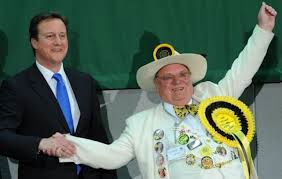
The party is now led by Alan “Howling Laud” Hope, seen here with a cheerful David Cameron.

loony with cameron

What’s the point of a procedure if no one knows or cares if it works?

Share

What is the point of a ‘business’ procedure if it can’t be enforced?

When you’re designing any kind of procedure you must always ask yourself – is it worth it? And, if it is, how can you ensure that it works?

paperwork

A recent example of absolute futility was the Ebola-contact form that you had to fill in when arriving at Vaclav Havel Airport in Prague. The procedure has long-since been abandoned but whilst the epidemic was raging cabin crew handed out forms on every flight to the city. On the first few flights the cabin crew collected the forms. I don’t know what they did with them, but it didn’t matter if you gave them an empty form or filled in some fictional details.

Later, you had to drop them into a box in front of passport control. I never found out where the box was.

The form was far from simple. You had to give your name, address, passport number, date of birth, flight number, seat number, expected days in Prague, recent countries visited, and so on. And of course, you could never find a pen when you needed one. It was tedious, and completely pointless.

Perhaps it was almost imaginable that these forms might have been useful if the epidemic had spread globally, but I doubt it.

But without sanctions, without enforcement, without checks and controls, the procedure was a complete waste of time.

When designing a procedure whether around business systems or in the more public world always ask:

  • Is it worthwhile? Do the benefits outweigh the costs?
  • Is it simple enough, so that people will have the desire and time to comply with it?
  • Is there a way of ensuring accurate compliance?
  • Are there sanctions against laziness, dishonesty or facetiousness?

In any case, the Ebola epidemic, though not extinguished, is waning. And somewhere near Vaclav Havel Airport there is a huge bonfire raging.

Ed’s Stone of Pledges

I’ve clung to the belief, despite everything, that Ed Miliband is an intelligent man. He’s not a natural in the limelight, perhaps, but he’s a serious, thoughtful, principled, well-meaning man, whose unalluring manner may not necessarily disqualify him from high office. In fact, I believe it’s likely he’ll be our next Prime Minister following the General Election on Thursday.

Why then, does he do the silliest things?

ed stone

Take this slab of limestone onto which he’s inscribed the pledges that will bind him if he’s granted the keys to Number 10. It’s so religious. It might be the Ten Commandments, the Book of Mormon, the smooth slab at the start of 2001 A Space Odyssey, or indeed a tombstone and the inscriptions his epitaph. And what to make of the pledges themselves (pledge, too, has a portentous sound)? They’re all disarmingly vague, if  you examine them in detail. You might as well be reading the carefully self-fulfilling nonsense you get in horoscopes.

Here they are:

1. A Strong Economic Foundation

So, who would disagree with that?

2.Higher living standards for working families

Who would disagree with that, though I don’t know what ‘working families’ means or how many it applies to?

3. An NHS with the time to care

This is utterly ghastly. I presume what’s meant is that nurses and doctors should have more time to spend with patients. But who can guarantee that they will care, or that it won’t come at the cost of less effective equipment and medicine? What possible policies could actually be derived from this pledge?

4. Controls on immigration

There are already controls on immigration. I showed my passport to the Border Force last night. This means nothing at all.

5. A country where the next generation can do better than the last

Interesting choice of words. Why ‘can’ rather than ‘will’? In any case, who would disagree with this, once we know what ‘better’ means?

6. Homes to buy and action on rents

What action, actually? Rents up, or down?

All meaning, all differentiation, all implication for practical policy have been leached from these anodyne phrases. Who would disagree with any of them? Not Dave, not Nick, not Nige, not Nicola. But civil servants will scratch their heads when asked to draft policy.

Clearly stonemasons will be busy. We’ll all want a pledge stone. I’ll put one in our reception area:

  1. A company that’s nice to its customers
  2. A company that’s nice to its staff
  3. A company that’s nice to animals
  4. A company that’s nice to the environment
  5. A company that’s very nice all the time
  6. Above all, a company with time to care

Don’t take this to mean I mightn’t vote Labour though.

Polls and Polls – Reading the Tea Leaves

As the UK’s General Election approaches and the polls, and polls of polls, and polls of polls of polls, proliferate, the media have become desperate to tell us something new. But there’s nothing new to say. The polls haven’t budged much, nor indeed the polls of polls, or polls of polls of polls.

statistics

‘It’s probably going to be a hung Parliament. The Tories may get a few more seats than Labour, but they won’t have sufficient seats to form a Government, even with help from the Lib-Dems.’

That was what they told us five weeks ago. It’s still true.

So I was amused by the BBC’s recent Panorama programme on who’s going to win the election. In desperation they’d hauled in the most famous, and famously successful, pollster in the world – Nate Silver of FiveThirtyEight – who got every state right in his prediction for the last Presidential Election. A fresh pair of eyes, and particularly this pair, must surely bring new insight to the game.

The BBC traipsed him around the UK, a sleek silver American caravan in tow (did it contain a statistical number cruncher?). He asked a few questions of the kind that any of us might ask, in markets, bingo halls, casinos, and the like, and made some unremarkable observations: ‘He’s a shy Tory,’ ‘She’s not going to change her mind,’ ‘He’s not telling you what he’s really thinking,’ and so on. They talked in a sophisticated way about the usual drift towards the incumbent party in the last few days. I think he may even have said, ‘It’s the marginals that really matter.’

And at the end of it, when the algorithms had done all their brainy statistical work, and I at least was fully hooked and desperate for a prediction, there came something like this:

‘It’s probably going to be a hung Parliament. The Tories may get a few more seats than Labour, but they won’t have sufficient seats to form a Government, even with help from the Lib-Dems.’

Well, that’s good to know.