Lovely, but Unelectable

There is much to admire in these three undoubtedly lovely men, all stalwarts of the ‘old’ and principled Labour Party, all unelectable.

tony benn

Tony Benn (1925 – 2014)

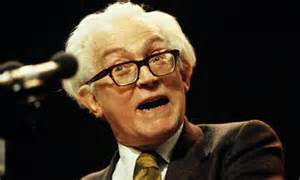
michael foot

Michael Foot (1913 – 2010)

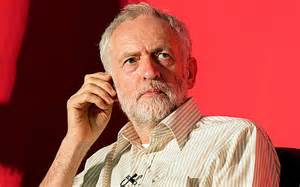
jeremy corbyn

Jeremy Corbyn (1949 – )

Of these three, only Michael Foot has so far led his party into a General Election (1984), losing disastrously with the fewest votes for half a century or more. If the polls are correct then Jeremy Corbyn might soon win the chance to do the same.

Though each is of a different generation, and each came to his radicalism by a different route, all three share some of the same qualities.

  • They’re not in it for themselves (Jeremy Corbyn, for example, claimed fewer expenses in 2010 than any other MP)
  • They care deeply about inequality, poverty, injustice, etc., and oppose it vigorously, seeing Labour’s policy as the best suited to alleviate disadvantage
  • They are anti-establishment and anti-elitist
  • They have a fond belief in the essential goodness of humanity (except perhaps that of ‘capital owning humanity’ whom they see as rapacious and essentially selfish)
  • They believe that state ownership and state intervention are the route to a more equitable and a more efficient society

Michael Foot’s convictions were formed during the conflicts of the 1930s, when capitalism and socialism were stark and incompatible opposites, and when capitalism seemed to tend inexorably towards Fascism (as a young journalist he vigorously opposed the appeasement policies of the Chamberlain government). He was an intellectual socialist, and he stuck to the belief that socialist economics could work. He campaigned throughout his life for nuclear disarmament (even unilateral disarmament) and it was probably Labour’s disarray on this topic that lost him the election in 1984. He was a notably kind, funny, personable, man.

Tony Benn nearly became Deputy Leader of the Labour Party in 1981, but profound influence on the policies of the Labour Party in Government ultimately eluded him. He, too, was convinced of an old-fashioned, ideological, class-warfare kind of socialism. He was happiest in the company of union officials, drinking mug after mug of tea (not for him the fine clarets and champagnes of New Labour). Perhaps, like Marx, he believed that socialism could transform human nature and resolve the conflicts that arise from personal or class interest. He was also a notably kind, funny, personable, man, and, even in his later years, still a man of the people, travelling to Parliament and back by bus.

Jeremy Corbyn is an activist, allied to all the radical (and often admirable) causes of the last thirty years, including nuclear disarmament, opposition to the Iraq War, the extradition of General Pinochet, and many others. He has never been a member of the Shadow Cabinet, and was, during the last Labour Government, the most rebellious Labour MP. He has never been a Party man, and clearly never fed at the Westminster trough. I’m not sure he is as witty, warm and personable as Tony Benn or Michael Foot, but he comes across as an ordinary, soft-spoken, even if passionate man.

But none of these three is imaginable as Prime Minister.

The fact is that there are some truths about the world that in their goodness and idealism these lovely men don’t see. Perhaps it is because they have never worked extensively in the commercial world. Take this passage from Tony Benn’s diary from 1965 (when he was Postmaster General and obsessed with the idea that the Queen’s head should be removed from postage stamps):

This highlights in my mind one of the great difficulties of being a socialist in the kind of society in which we live. The real drive for improvement comes from those concerned to make private profit. If, therefore, you deny these people the right of extending private enterprise into new fields, you have to have some sort of alternative. You have to have some body which wants to develop public enterprise, but our present Civil Service is not interested in growth.

Benn rightly sees ‘private profit’ as an engine of growth, as motivating ‘improvement’, and he’s struggling, in painfully good faith, to come up with a substitute for this in state-owned industry. But he completely misses the point. Private profit leads to improvement only if there’s competition (it doesn’t work if there’s a private monopoly). Competition is the point, not profit. Profit is the means, not the end.

This point, blindingly obvious to most of us, just doesn’t occur to this well meaning, but naïve and, in terms of practice, inexperienced man. Yes, it’s certainly hard to see how competition can be fostered within or between state-owned enterprises. The shabby unproductive factories of Eastern Europe are witness to the lack of it. ‘Growth’ and ‘improvement’ cannot be directed, even by the best motivated Civil Service in the world, or by the most well-meaning Government. Benn seems to know that something is lacking, but doesn’t see what it is.

And all three of these lovely men are still devoted to the old class-war rhetoric that talks of ‘working people’ as if these are still the oppressed. exploited manual labourers toiling in mines or in Satanic mills. They forget that capitalism isn’t any longer unfettered (and never should be), that there’s the national health service (which could be better), there’s free education (that could be better), there’s a minimum wage (that could be higher), and myriad health and safety regulations that protect the ‘worker’ (whether struggling with a machine or at a call centre) from the mercilessness of capitalist greed. And they forget that everyone, whether ‘worker’ or not, aspires to better his or her lot. Whether you believe that the balance should be tipped more in favour of the disadvantaged or not, there’s no class war being fought, is there?

Admirably, none of them has the slick establishment gloss of the career politician, the pragmatic, non-ideological, unprincipled, deal-making skill that the likes of Tony Blair, David Miliband, David Cameron, even Ed Miliband and Gordon Brown possess.

But what do we want our politicians to be? Good men, unsullied by the realities of the world, averse to compromise, certain of their mission and clearly principled? Or realists?

There is currently a global, certainly European, aversion to establishment politicians. Conviction politicians, and anti-establishment parties of both the left and right are winning the votes of the disaffected, whether old or young. Syriza, in Greece, is a case in point. But what are the realities of power? Alexis Tsipras has, finally, been forced to accept a deal that is worse than the one his people rejected earlier in a referendum.

Labour party members or affiliates must ‘get real’. Unhappily, I agree with Tony Blair, that Jeremy Corbyn would be another disaster for the Labour Party. As Gordon Brown said yesterday, the Labour Party must be credible, radical and electable.

Inclusion and Diversity

It’s Gay Pride week in Prague, and as well as all the fun and festivity (which is, to my mind, completely unendurable during a 36C heat wave) there’s also some serious talk about diversity and inclusion – and some heavyweights to do it.

Yesterday’s Gay Business Forum, at the Hilton Hotel, was moderated by Evan Davies, the BBC’s Newsnight anchor, and presenter of Dragon’s Den. Whether he got back to London in time for Newsnight I don’t know, but we were lucky that he could spare a whole afternoon for the cause.

The first guest speaker was Lord John Browne, former CEO of BP, and architect of the company’s huge expansion in the 1990s and 2000s. He’s a formidable man, one of the world’s most prominent oil businessmen, and now Chairman of a new Russian-financed oil company, L1.

lord browne

In 2007 Lord Browne was ‘outed’ as gay by one of the UK’s gutter newspapers, and he resigned from his position as CEO, not because of the disclosure that he was gay, but because he had briefly lied in his attempt to prevent publication.

Following which, by his own admission he has never been happier.

I read Lord Browne’s book, The Glass Closet – Why Coming Out is Good Business, last year. As well as explaining how foolishly he had lived most of his life, attempting to conceal his sexuality (which everyone seemed to know about, and no one cared about) he argues forcibly that corporations of all kinds must be inclusive of all kinds of difference if they are to cast the net for the world’s best talent as wisely and widely as possible. The best might be black, white, blue, green, gay, straight, bisexual, transgender, Christian, Muslim, Jewish, Buddhist, Hindu, atheist, young, old, female, male, physically handicapped – whatever. All must feel comfortable in the workplace – and (to repeat a word that he uses frequently) ‘authentic’.

Some clever statistician in the audience claimed later in the afternoon that 300 Billion EUR of productivity are lost to Europe because ‘closet cases’ in the workplace are 30% less productive than the typical worker (a claim that could not, I think, be made about Lord Browne, who though securely in the closet, was, and probably is, an extreme example of the workaholic).

But I agree about authenticity. When I’m training consultants in soft skills I stress that we must be the same selves at home as in the office, merits and faults. And I encourage difference. Anything to avoid what is dull! Technology has blurred the edges of the workplace, and even the workday, so it’s less easy to define the limits of ‘work’ and ‘life’. We’re sometimes on holiday at work, and at work on holiday. At least I am.

But, most of all, it was moving to hear Lord Browne talk of the overwhelming support he received after his ‘outing’ and it’s clear that he is now a happy and entirely authentic man, and just as big an oil man as before. We were lucky to hear him speak and it is impressive that he devotes some considerable time to making the argument for diversity and inclusion.

“It is not enough to succeed, others must fail”

Share

This splendidly waspish remark is attributed to the writer, Gore Vidal. He was, himself, immensely successful, though acclaimed more for his ‘unserious’ writing than for his political novels, which I find, frankly, quite indigestible. It was these thoughtful and interminable novels about politics that he wished to be remembered for (rather in the way Leonard Bernstein longed to be remembered for his vast symphonies instead of West Side Story, when most of us would have been glad merely to have written one good tune from the show).

Gore Vidal wrote screenplays too, mystery novels under the pseudonym Edgar Box, made a lot of money, and mixed in the Princess Margaret set. But, struggling, despite his success, with some crippling insecurities (I suppose) he suffered fools very gladly indeed, in that it gave him immense pleasure to be both socially and intellectually superior to almost everyone he met. In most cases he was certainly the latter, but I can’t help thinking that those who are conscious of the former have already failed miserably in some way.

Envy is also a sentiment of the young. When we are striving for success or recognition, other people’s talents and successes are an affront. We must grin or grimace determinedly when we hear news of some friend’s astonishing triumph, triumph of a kind that has, as yet, eluded us. But as we age, we begin to take genuine pleasure in others’ success. Success and failure are not the necessary and balancing outcomes of a zero-sum game.

On the way to Bucharest airport yesterday, my colleague, Ioana, and I popped in to see our former colleagues, those working for the company that LLP Group sold 19 months ago. It was LLP Dynamics then, and is Xapt Romania now. Not so successful then, but conspicuously, confidently successful now. Microsoft’s Dynamics suite of software was never my cup of tea, and certainly, under my direction (and others) the company hadn’t thrived. I knew I couldn’t solve the underlying problems, and by the middle of 2013 it was wearing me down, so selling it brought me some guilty relief (and some cash, too, of course, though nowhere near the amount we’d lost). Guilty, perhaps because I felt I might be putting my own interest before my colleagues’. I was the captain, and I was abandoning the ship.

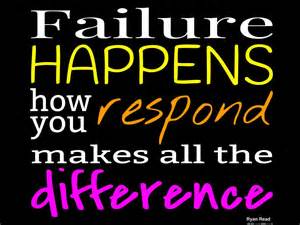
failure

But it wasn’t like that. The sum of human happiness has been greatly increased by the sale – my happiness I was sure of, but theirs too, as I could see yesterday. Now Xapt Romania is doing very well indeed. It’s the largest and best Dynamics AX reseller and consultancy in Romania. It’s profitable, it’s growing (now it employs nearly 50 staff), and it feels happy to me. Hats off to Mihai Madussi and his team.

It’s actually ok to fail, even if others succeed!

And, let’s face it, we haven’t failed everywhere. What’s left of LLP Group, (LLP Group, LLP CRM and systems@work) is still very much more my cup of tea, and it’s doing very well indeed.

Cabbage

I spent fourteen of the first twenty-one years of my life in institutions. These were neither protective nor penal, but, rather, expensive educational institutions my parents spent good money to send me to. Private education in Britain, however uncomfortable it may be, is a great privilege and an almost certain route to Empire building.

British institutions have one thing in common (or had, since I haven’t sniffed my way around one recently) – the smell of boiled cabbage, often also laced with a whiff of Jeyes Fluid (a floor disinfectant slopped about with a bucket and mop). They say that smell and taste are senses that are rooted more deeply in our memory and unconscious than sight and sound. Certainly the smell of cabbage stirs profound memories in me, usually recalling bleak Winter afternoons on the football or rugby field, where we played brutal games whatever the weather.

All over Britain cabbage is being boiled, and it’s prepared in a very special way. Chop it up, leaving the hard white stalks and spines intact, and boil for a couple of hours in very lightly salted water. The result is a disintegrating mess of watery mush with hard white bits that won’t soften however long you cook them. Boiled cabbage has taught me to eat almost anything at all in adulthood.

But there’s more than one way to cook a cabbage.

sarmale

I’m in Bucharest this week, visiting the new office of our Romanian subsidiary (LLP Group). Ioana and my other four colleagues took me out to lunch and I ate sarmale. These are stuffed cabbage leaves. They’re much better than those awful stuffed vine leaves they make in Greece and export in tins. Stuffed vine leaves are watery, slightly acidic parcels, made with what feels like thick green paper. The cabbage leaf, by contrast, is perfect for the job of enclosing a mix of spiced minced pork and/or beef, rice, and dill. The cabbage adds a little flavour, but not too much, and its texture, soft and yielding where the vine leaf is hard, is ideal.

It’s also a wonderful picnic food since you can eat each parcel with your fingers. The best sarmale I ever ate were made by Svetlana Culin and we ate them at the back of a tiny hotel in Comrat (capital of the Turkish-speaking Gagauz region of Moldova), albeit without the sour cream that makes them even more delicious and more deadly. Those sarmale set my ‘gold standard’ forever.

I suppose that Europe can be divided into four different cabbage zones. There are those of us in the rugged north who boil our cabbage until it has neither texture nor flavour; there are those in middle Europe who ferment it and serve it as sauerkraut in a variety of different colours (both red and white in Prague, and no doubt soon blue, the third colour of the Czech flag); there are those in Turkish influenced Hungary and the Balkans who stuff it with spiced meat (sarmale in Romania, toltott kaposzta in Hungary), and wisest of all, there are those in southern Europe who give it to their animals.

At the Athenee Palace in Bucharest

It was Olivia Manning’s Balkan Trilogy that first drew me to Bucharest. I had been sent on a consulting assignment to Budapest in the summer of 1987, and only three weeks into the assignment couldn’t resist travelling, a long and arduous overnight journey, in appalling heat, by train, to its like-sounding and neighbouring capital (famously, an international rock star recently greeted his Bucharest fans with ‘Hello, Budapest!’). A sinister security man inspected every item in my luggage as we crossed the border, and then pronounced, like Dracula on the threshold of his castle, ‘You are welcome to my country.’

My Hungarian colleague were astonished that I wanted to visit Romania. The country was skidding into its last two Ceausescu years, and Hungary’s relationship with the regime, despite fraternal socialist solidarity, was hostile. Ceausescu was bent on ethnic homogenisation, apparently destroying traditional Hungarian villages and collectivising their inhabitants into insanitary concrete bunkers.

So, I was realistic about what I might find in Bucharest. I didn’t imagine that the shabby grandeur and glamour that Olivia Manning describes would have survived. Olivia and her British Council employed husband, Reggie, arrived in Bucharest on 3rd September 1939 (the day war was declared in Britain) and remained there as the country succumbed gradually to German influence. It was then, as now, all about oil. Romania possessed vital oilfields of strategic significance to the Reich.

I’m in Bucharest, again, 28 years after my first visit, staying at the Athenee Palace Hotel. I visit often, since LLP Group has a branch in Bucharest, but I don’t usually stay here. It’s a five-star Hilton Hotel and expensive. But business deserts Bucharest during the heat of the summer and I got a very good rate, and thereby access to the cooling indoor swimming pool.

athenee palace

This hotel plays an important walk-on role in the Balkan Trilogy. Its English Bar is the scene of social ascent and descent, political gossip and shamelessly overt spying. Olivia Manning and her husband lived just around the corner in a flat that I think is one of these:

Olivia Manning

The Balkan Trilogy is largely autobiographical and one can plot Olivia’s and Reggie’s lives directly from the pages of these three novels. She found the city daunting – exciting and appalling in equal measure. She described it as being on the margins of European civilisation, “a strange, half-Oriental capital” that was “primitive, bug-ridden and brutal”, whose citizens were peasants, whatever their wealth or status.

When Romania became a dictatorship a couple of years later, Olivia and Reggie escaped on ‘the Lufthansa’ to Athens, and then, when that city fell, to Cairo.

Whatever charm the hotel once possessed has been subtracted by the Hilton chain, so there’s little to remind you of the dreadful but fascinating first years of the Second World War.

After the Communists came to power the hotel declined rapidly into socialist shabbiness. Whether it’s true that every room was bugged and every waiter a spy I do not know. I can’t imagine that anyone of interest or note stayed here.

I saw the hotel myself during its lowest years in 1987, during my weekend away-break from Budapest, mainly to drink in the atmosphere of the Balkan Trilogy, and I found myself drinking a warm unlabelled beer in the courtyard of the hotel as a toast to Olivia and the past. I waited nearly 40 minutes for it and nearly missed my train to Brasov.

In 1989 the changes came, Nicolae and Elena Ceausescu got shot, and in due course Bucharest became less interesting, more modern, and, as the years passed, even service at the Athenee Palace became sharper. I’m sorry that the hotel is a bland ghost of its former self, but I don’t think Hilton had much of a choice. It’s comfortable, and I’m grateful for the air-conditioning during this summer’s European heat wave.

The only spying you’ll find is on the contents of your minibar.

The Art of Consulting – Persuading

Share

In the mid-1980s I worked for a large IT services company in London. Every so often the company arranged an away-day, a sort of troop-rallying exercise in a good hotel with plenty of food and drink to lubricate the message. We troops would sit through a series of motivating talks, the usual graphs and bullet points, though it was before the days of PowerPoint, so all of these were printed on slides and projected using an epidiascope.

These were the relatively early days of the corporate presentation and I was new to the whole exercise. I almost enjoyed it. I remember the CEO’s presentation as especially impressive. There was a picture of the Queen at one point, and a dog, but I can’t now remember why. He brought a touch of irony to the proceedings that made his talk stand out from the rest. As I recall, he ended by asking all the salesmen in the room to stand up. A few rather self-consciously struggled to their feet (salesmen drank more at lunchtime that we consultants did).

‘What about the rest of you?’ the CEO asked, ‘Why aren’t you all standing?’

It’s a tired trick, but not so tired that I haven’t tried it myself from time to time. Yes, of course, in a sense we’re all ‘salesmen’ even if our job title doesn’t include the word. We must all present our company in a favourable light and keep our ears pricked for potential opportunities. Some consultants aren’t cut out for this, and however good they are at their job, they’re almost ashamed that money should be demanded in return for what they do. But some are good, or very good. Indeed, in my organisation some of the very best salesmen (even those with the word ‘sales’ in their job title) have formerly been consultants.

Selling projects is one thing, and not all of us are suited to the argy-bargy of negotiation, but selling ideas is another. If we’re advising our clients, and if we firmly believe in our advice, then at the very least we must persuade, and there’s an art to that too.

Persuading

The most important point about persuasion may sound counterintuitive. It is that, as in almost all situations, it’s better to listen than to speak. You won’t win by wearing people down with words. And , after all, you already know what your opinion is (I would hope) and why you hold it. But you may not know in advance what your client’s opinion may be, how he has understood your reasoning, what his objections may be and what motivates them. He may disagree as to the facts, he may disagree as to your reasoning, or he may raise issues that you haven’t considered (certainly judgements as to the pragmatism of your advice may differ, since the client’s knowledge of his organisation is likely to exceed yours). Finally, he may object irrationally, for all kinds of emotional reasons.

So you must listen very carefully to understand the motives behind your client’s objections. Of course, you should already be aware of some of them, especially if they’re based on disagreement as to the facts. If you’re not aware of these, then your project hasn’t been managed well. By the time you come to make your case you should be aware of opposing views, findings and interpretations.

Listening is essential if you’re going to persuade. You can’t just disagree, and mount a direct assault on your client’s opinion. You mustn’t be aggressive but you mustn’t be defensive either. You must always behave and persuade in a way that allows for compromise and even defeat. You can be enthusiastic about your opinion, but not emotional. You mustn’t seem so wedded to your view that compromise or defeat will seem like a personal affront or contempt for your professional skills. Whatever you do or say, you must not put your professional relationship with your client at risk. As with all negotiations you must have a number of compromise positions prepared in advance.

I have always hated training courses that aim to teach you a thing or two about human behaviour. They’re often based on a few bogus ideas from behavioural psychology. I studied psychology at university and developed, during those three years, a lifelong aversion to the subject. But on one ‘interpersonal skills’ course I attended in the early 1990s I learned something useful. The subject was ‘how to be assertive’. If you want to assert your own point of view, to persuade others of its merits, and to prevail, we were taught, you must strenuously demonstrate that you understand your opponent’s (or client’s) point of view. You begin your argument by showing that you have listened to and understand your opponent’s point of view. You might even flatter.

‘It’s interesting that you see it that way,’ you might begin. ‘I can understand that from your point of view, with all your experience it would seem obvious that it should be done that way rather than the way I’m recommending. Indeed, I’ve seen similar circumstances where that is exactly the right course of action, and where what you’re recommending has worked. It often makes sense. BUT……..’

And then you go on to explain why the circumstances, or the logic are different in this case. It doesn’t always work, but often it does. And even if it doesn’t, you’ve demonstrated an understanding of the client’s point of view, perhaps even to the point that you may be persuaded of it. Whatever happens, you’re more likely to reach a compromise without endangering your relationship.

Arguments and ideas are lost if your client thinks you don’t understand his position, or if you seem too emotionally attached to your own, or if he thinks you’re concealing some deeper agenda, or if you’re arrogant, or if he suspects you think he’s stupid. You’ve got to be reasonable and likeable at all times.

When you’re persuading, always take account of what will work for your particular audience. Get the level of detail, and the level of informality right, and always understand the motivation of your audience.

Persuasion is most effective when it quiet and reasonable and acknowledges alternative points of view.

See also:

The Art of Consulting

The Art of Consulting – What’s the Role of the Consultant?

The Art of Consulting – Impartial, Honest and Independent

The Art of Consulting – The Essential Skills

The Art of Consulting – Listening

The Art of Consulting – What’s a Good Question?

The Art of Consulting – Representation and Analysis

The Art of Consulting – Writing Simply

The Art of Consulting – Designing (Completeness & Simplicity)

The Art of Consulting – Designing (Pragmatism)

The Art of Consulting – Designing (Affordability, Flexibility, Maintainability, Elegance)

The Art of Consulting – Judgement

The Art of Consulting – Presenting

The Art of Consulting – The Final Report

Happiness is not having what you want, it’s wanting what you have….

I saw this loathsome platitude on LinkedIn the other day. It’s one of those sententious, apparently simple directives that’s supposed to stop you in your tracks and change your life forever. In my case it merely triggers the gag reflex.

‘Gosh, I never thought of that,’ you’re supposed to exclaim (and perhaps fall to the floor like St Paul on the road to Damascus). ‘I can be happy now.’

Wanting

Now, of course there’s an element of truth in it. Having things isn’t necessarily the route to happiness. Cars, trophy wives and husbands, lovers, yachts, money, houses, democracy, gold, education, antiques, holidays, refrigeration, paintings, fashion accessories, justice, clothes and other fripperies aren’t a sure-fire recipe for happiness, but, let’s be honest, some of them help.

And, to be fair, this nonsense is probably about ‘things’ in the sense of physical things rather than abstract things of unchallengeable value such as health, justice, democracy and education. And surely no one, not even the smug author of this facile rubbish, is suggesting that happiness is wanting the cancer you’ve got. Accepting, perhaps, though also fighting – but surely not wanting.

So,don’t lecture the homeless, the starving, the exiled, the sick, the uneducated, and suggest they’d be perfectly happy if they stopped wanting things.

In fact, there are hard(-ish) facts facts about happiness and material prosperity. The Economist reports that emerging countries and rich countries are converging in terms of happiness, but poor countries are still lagging far behind. Don’t tell me that the citizens of these poor countries just need to read and accept this demeaning platitude. It would certainly be cheaper and more convenient than involving the World Bank and Foreign Aid, but I wouldn’t recommend it.

Many religions and philosophies suggest that ‘wanting’ is not the path to happiness, but their point is probably a more subtle one. They’re probably suggesting we shouldn’t even want what we have.

Even the Serenity Prayer accepts that we should change what we can (and how can you do that without wanting?):

God, grant me the serenity to accept the things I cannot change, The courage to change the things I can, And the wisdom to know the difference.

And, where would the world’s economy be if we were simply happy with what we have?

Killing for Self-Esteem

I am no animal rights activist and I do not believe that animals should be accorded rights equal to human rights. But that is not to say that they do not possess rights in some degree.

Morality and the concept of a right, whether enshrined in law or not, stem, I believe, from our human capacity to empathise with other humans as well as with creatures less mentally complex than we are. We know what it is for others to feel pain, to be denied freedom or opportunity, to have ambitions thwarted, and I believe we naturally confer rights on animals to the extent that they are mentally complex, and we can imagine and empathise with animal life.

We grant no rights to machines (so far), nor to simple organisms such as amoeba. We dispose of most insects without sentiment, but we live with and near many animals that are capable of pleasure, of anticipation, of pain, anxiety, and other forms of suffering. If we inflict suffering on animals there must always be justification, and, by and large, law and human convention reflect this.

As a child, of course, I killed insects without qualm, though I never pulled the legs off spiders or, as one boy at my school did, ate them alive. But as an adult I have become ever more squeamish about suffering and the casual extinction even of insect life. I would rather show a wasp the way to an open window than squash it against the pane.

Killing, and indeed any ‘use’ of animals for human purposes, always needs justification and must always, whenever possible, avoid suffering. We may kill animals when our own lives are threatened, when our well-being is threatened (by disease-carrying insects, for example), for food, perhaps even to enable the development of important medicines, but always with the intention of reducing suffering to a minimum, and always taking account of each animal’s differing capacity for suffering. Sometimes nothing will justify extreme mistreatment.

But killing for pleasure is always wrong. There is no right to pleasure, and the denial of pleasure is not suffering, so there is no calculus that delivers justification by giving balancing weight to suffering on the one hand, and the denial of pleasure on the other.

Which brings us to Cecil and the ‘trophy-hunting’ habits of the rich and powerful.

cecil

Killing for sport, which is killing for pleasure, without any other justification, is always wrong. Granted, it may sometimes be a minor wrong, such as when fish are killed but not eaten by anglers. Fish are complex and often beautiful, but the mental life of fish, their capacity to suffer, is of a lower order than the mental life of primates (and lions). We cannot easily imagine, in fact, what it is like to be a trout, or a bat, but we can, to a great extent, imagine the perceptions, feelings and mental life of a lion, of a chimpanzee. We share enough, behaviourally, with such creatures to imagine their suffering, their capacity for pleasure and their zest for life in general.

So, what about Walter Palmer?

My first difficulty with this Minnesota dentist, paradoxically, is to imagine his mental life, and the mental life of trophy killers generally. I cannot understand why anyone would want to kill something beautiful, if it poses no threat. It seems as bizarre to me as if an art collector would buy great paintings in order to shred them.

I presume it must be about dominance, about self-esteem, but it is not as if the killing of Cecil were some primal conflict between man and nature, a struggle for survival, a case of a puny biped pitted against a powerful carnivore on equal terms. No, these are stage-managed killings, unequal in their starting conditions, and utterly predictable in their result.

I have, for decades, argued with one of my very best friends about fox-hunting and I am not entirely sure of my position. There is something that is always distasteful about taking pleasure in killing, but I am not sure if that is always enough to disqualify it. It seems to me that it is a technical question as to whether a) foxes must be killed for the greater good, and b) killing them by hunting them with dogs is as humane as any other way. But justification there must be. Killing foxes for sport and pleasure alone is wrong.

But the hunting of large, complex, beautiful (and often endangered) creatures merely for ‘sport’ cannot be justified and should be outlawed. Never mind that some ‘conservationists’ might justify controlled hunting through the money it raises for preservation. That end does not justify the means. To my mind it is always wrong, and must be forbidden.

Provincial dentists must find some other way to feel big and powerful.

An Architectural Wink

I bicycled through Pelhrimov in the Czech Republic more than ten years ago, and when I lunched there last Sunday I remembered how amused I’d been a decade earlier by Pavel Janak’s architectural joke in the corner of the magnificent central square.

It’s a witty case of Czech Cubism, as far as I can see – an architectural movement that’s usually a bastion of high seriousness. I see it as witty, but it’s quite possible that I am at odds with its author. I know too little about Pavel Janak and Czech Cubism to know what his intentions were.

The main square in Pelhrimov, though less consistently of one period than the wonderful square in Telc, and much smaller, is a catalogue of the many architectural styles that have flowed through the Czech Republic or originated there, from the Renaissance, through Baroque, Art Deco, and Cubism to the modernism of the First Republic that followed the First World War.

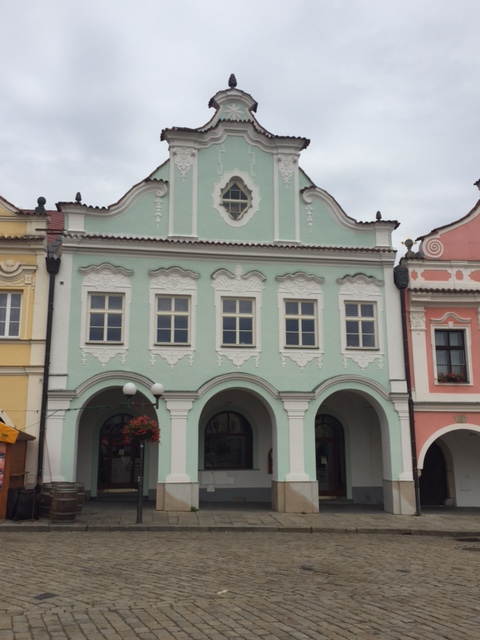
Architecture isn’t an obvious medium for humour but this Cubist reworking/renovation of a typical high-gabled Baroque façade must surely be intentionally witty, especially the inversion of the gable’s highest point. It’s a raised eyebrow, or a wink.

Cubist Wink

IMG_2353

Baroque

IMG_2354

I don’t know what choices Janak had, but demolition and rebuild must have been one of them. After all, across the square there’s a modernist building, built, perhaps, only fifteen years later, that owes nothing to the prevailing style of the square. Janak chose to preserve both gable and arcade, adding his own particular Cubist signature.

Czech Cubism flourished in the last years of the Austro-Hungarian Empire, and perhaps the perspective then was more nostalgic than forward looking. In the newly created Czechoslovakia of the First Republic it was not only more permissible but perhaps even more fashionable to demolish and start again.

1920s Optimism

IMG_2359

And there’s an Art Deco hotel that must have preceded Janak’s renovations by less than a decade. This must also have been preceded by demolition.

IMG_2357

For lovers of Czech Cubism, which was a short-lived architectural movement, best represented in Prague, it must be consoling to see the same ideas living on in the design of stealth aircraft. (Actually, this is a little more than just a joke, since in both cases the idea is to break up corners and add contouring to flat planes. In the one case, of course, to avoid detection, and in the other, for very serious reasons that I lack the expertise to explain.)

Czech Cubist Stealth Fighter

F117

The Art of Consulting – The Final Report

Share

Many of us approach the end of a consulting project with a sense of dread. Not because we fear the unemployment that might follow, but because we must usually write a final report for our client, and most of us don’t like writing.

Final Report

Part of the discomfort we feel may stem from the fact that a final report must be definitive. Until we put pen to paper, or fingers to the keyboard, our ideas are provisional, our arguments sketchy, our evidence incomplete. We may have formed a well-founded opinion, perhaps even an instinctive one, but we may not yet have fully marshalled our arguments and our evidence. The report we must write must demonstrate conclusively, consistently and coherently that we have brought knowledge, experience, imagination and reason to the process of consulting. This requires intellectual effort, and getting the brain started on the business of thinking hard isn’t always easy. It’s like going to the gym after a long day at the office.

Which is why it’s often a mistake to leave report writing to the end. My own experience of consulting is that writing things down, or representing and analysing them is part of the sifting, constructing, creative, solving process. Often I don’t know what I think until I put my thoughts into words. On the page, on the screen, words must meet higher standards of coherence, clarity and logic. Faults in reasoning, weaknesses in solutions, become apparent when we put them into words and represent them in pictures.

So it’s best to start writing at the very start of a project. Write down your assumptions, your findings, your ideas, the issues you haven’t yet resolved as soon as you can. It doesn’t always matter if your jottings lack structure. As things come into focus, you’ll find that you can rearrange your text, delete what isn’t useful, and gradually arrive at a structure that makes some sense. Writing is part of the intellectual and creative process.

Of course, some don’t need to do this. Think of Mozart. He could imagine an entire symphony, complete with orchestration, and writing it down on paper was merely a chore. But few of us are Mozart!

Although I advocate a piecemeal, early start to report writing, a final report should conform to some sensible conventions. The best test of what it should contain is to imagine an interested but uninformed reader who will come to your report knowing nothing about the project.

The reader will want to know:

  • Why the project was commissioned
  • What was the project’s scope
  • What was assumed
  • What was deliberately or inevitably excluded
  • Who worked on the project (from the client’s as well as the consultant’s organisation)
  • Who wrote the report (and who revised it)
  • What was the project’s method
  • What were the findings
  • What are the recommendations
  • What are the next steps
  • What are the dissenting views, if any

I like to present everything at three levels of detail.

  • A summary (often, inexplicably, called an Executive Summary as if senior managers need read no further)
  • The main body of the report
  • Appendices containing supporting detail

Summary

The purpose of a summary is twofold. First, for some (lazy?!) readers it may be sufficient (as the Bluffer’s Guide to Opera might alleviate the social discomfort of an evening of Grand Opera). Second, it signals in advance the direction of the complete report, so that you can read at the second level with the authors’ conclusions in mind.

So, for example (using the traditional bullet-point style):

  • This project was commissioned with Board Approval by the Logistics Director to examine the cost and reputational damage resulting from inaccurate stock data relating to the company’s ten warehouses
  • The project team investigated and documented current stock management procedures, visiting each warehouse and interviewing all staff involved in stock movements, and was able to determine the probable source and consequences of mistakes
  • Stock handling procedures are inconsistent and prone to inaccuracy. Stocktaking, as well as reconciliations between issuing and receiving locations, are not methodical. Current problems result in losses of sales (estimated at 140 K EUR annually), overstocking (average 12%, representing 80 K EUR of working capital) and reputational damage (unquantifiable)
  • Manual procedures should be replaced by a simple company-wide off-the-shelf computerised system
  • The cost of implementing such a system need not exceed 100 K EUR, with ongoing annual costs of 25 K EUR and an implementation project could be completed in six months, requiring the full-time attention of one senior manager in the logistics department for that period, and two days a month of IT time
  • The next step should be to commission a description of the stock management procedures to be supported, and then to seek tenders for software and implementation consulting

The Main Body of the Report

The main body of the report will elaborate on this summary.

  • Background will describe in more detail why the consulting project was commissioned, citing examples of the issues it should address
  • Scope will define the limits imposed on the project (e.g. it should exclude certain kinds of warehouse (stationery, for example) and should not tackle the issue of item identification, etc.). It is as important to exclude explicitly as to include explicitly
  • Participants will list members of the project team, what they do, and what their role on the project will be, and all contributors to the project (for example, those interviewed for their opinion)
  • Author(s) will list all contributors to the document and the dates of versions and revisions
  • Assumptions will list agreed assumptions relevant to the project (e.g. that the company has provided a complete list of relevant staff to interview)
  • Exclusions will list any relevant data or opinions that cannot be obtained, and the reasons (e.g. that the logistics department were unable to provide any documentation on inventory procedures)
  • Method will describe how the project team carried out its work (referring to any supporting documents (e.g. questionaires) in Appendices)
  • Findings will summarise all facts relevant to the report’s recommendations (referring to detail in Appendices)
  • Recommendations will lay out a number of suggested courses of action, with priorities and costs
  • Next Steps will lay out what should be done next in order to implement the recommendations
  • Dissenting Views (a rare section) will identify disagreements as to findings and recommendations

Appendices

These provide additional information that a reader may examine in order to judge the reasonableness of method, findings, recommendations, etc.

In all cases language should be plain and simple, persuasive but not emotional. Brevity, clarity, and readability are the goals. Do not be dull, if you can avoid it.

See also:

The Art of Consulting

The Art of Consulting – What’s the Role of the Consultant?

The Art of Consulting – Impartial, Honest and Independent

The Art of Consulting – The Essential Skills

The Art of Consulting – Listening

The Art of Consulting – What’s a Good Question?

The Art of Consulting – Representation and Analysis

The Art of Consulting – Writing Simply

The Art of Consulting – Designing (Completeness & Simplicity)

The Art of Consulting – Designing (Pragmatism)

The Art of Consulting – Designing (Affordability, Flexibility, Maintainability, Elegance)

The Art of Consulting – Judgement

The Art of Consulting – Presenting