‘Poles of the Worst Sort’

warsaw

I dined and lunched in Warsaw with Poles of the worst sort on Thursday and Friday, or, rather, ‘Poles of the worst sort’, the description recently used by Poland’s Jarosław Kaczyński, leader of the right-wing Law and Justice Party, to describe all opponents of his party. These Poles of the worst sort have been my friends for between ten and twenty years, and I have never known them more anxious about their country than now. They are cultivated, intelligent, successful, secular, liberal friends who have enjoyed and been proud of the Poland that emerged from Communism in 1989. Two of them find themselves, for the first time in decades, marching again for a political cause, their freedom.

The Law and Justice Party, led by Jarosław Kaczyński, but represented in Government by Prime Minister, Beata Szydło, now rules Poland. It had never before commanded a majority in the Sejm, but since winning power with an absolute majority, last year, the Government has set about building the kind of ‘illiberal democracy’ promoted by Viktor Orban, Prime Minister of Hungary. Together with Hungary, and perhaps Slovakia, Poland might yet form an axis of right-wing intolerant nationalism radically at odds with the founding liberal values of the European Union. Only the Czech Republic, one of the most secular nations in Europe, adheres still to the liberal values it embraced after the fall of Communism.

The Polish Government has moved so fast and so far in an illiberal direction that, following attempts to challenge the independence of the civil service, place the public media under Government control and attack the constitutional court, the European Union has begun to probe its undermining of democracy. What the EU might eventually do about it is questionable. There is no realistic option that sanctions might ever be applicable.

Poland’s economy is the 23rd largest in the world, and its estimated GDP per capita (at purchasing power parity) of 27,654 USD places it 49th in the global rankings. The country was one of the few to continue growing during the recent financial crisis.

Poland has been conspicuously successful. My visit to Warsaw last week was my first for three years, and I was astonished by how the city has changed, even over such a short time, the centre now bristling with impressive high-rise offices. There is a feeling of power, prosperity and confidence to the city. The previous Government had not been notably incompetent.

Why, then, has the country lurched to the right?

It might be yet another case of popular frustration with the political establishment. Clandestine recordings of conversations at a restaurant frequented by ministers of the last Government apparently revealed a cynical contempt for the electorate amongst the ruling classes. This might have been a factor. My friends suggest that it is the young who have elected the new Government, and who most ardently support it, apparently attracted by its blunt, uncompromisingly Catholic, and occasionally xenophobic, attitudes.

Poland’s Foreign Minister, Witold Waszczykowski, has worried about “a new mixing of cultures and races, a world made up of bicyclists and vegetarians, who … fight all forms of religion.”

This is unpleasant rhetoric, nationalist, and socially illiberal. It is ironic that the Government has criticised recent German commentary as Nazi in tone, when their own language hints at racism and the intolerance of minorities of all kinds. But even the Catholic Church, a keen supporter of the Law and Justice Party, offers no particular views on vegetarianism and bicycling.

Where, I wonder, would the Polish Government stand on such issues as gay marriage, asylum seekers, and abortion? I asked my friends when we might see legislation passed in Poland to allow gay marriage. Their incredulous laughter was answer enough.

Read more in this excellent commentary from the New York Review of Books.

Berlin

Sometimes a city means more to you when you know it less well, especially when it’s a city whose history and monuments you’re acutely aware of in other ways, from a distance. Familiarity doesn’t always breed contempt, but it certainly diminishes the power that a city possesses to gobsmack you in virtue of its history, and its most emblematic monuments. Over time, and when you get to know the street-level detail of a city, the awe that you might have felt on first arrival becomes a distant memory. Showing visitors around can help to revive a sense of excitement, but only partially.

Nowadays, it’s not often that I go to a large European city whose streets I hardly know, but which in another sense I know well. Yesterday I travelled to Berlin from Prague. The city is just four and half hours away by train, but in twenty-three and a half years of living in the Czech Republic I’ve visited it only once, briefly, for a business conference in a far-flung suburb, and just once before that, in early 1989 when I was helping an East German to escape to the West by pretending a relationship that didn’t in fact exist (an exit visa to the West was finally issued two days before the Wall came down).

Yesterday, arriving at the main railway station in Berlin I suddenly felt that feeling of awe that I probably last felt more than twenty years ago, when. for example, I found myself hardly believing that I was standing in front of the actual Roman Forum, and in the actual Vatican – a sense of unbelievable privilege that I could actually get to see these things.

It was a glimpse of Norman Foster’s dome on the Reichstag that did it for me yesterday, and then, as a taxi took me to the Plan B Gallery (to look at the Serban Savu paintings I wrote about some days ago), the Brandenburg Gate and the double-brick line in the streets that marks where the Wall once stood. I was no longer, for a moment, the jaded business ‘road warrior’ who’s seen it all. It was almost like being young again, capable, once again, of awe and excitement. And it all looked so different from 1989.

What is Berlin to me?

  • The 1930s city of Christopher Isherwood’s Berlin novels and stories and Liza Minelli’s Cabaret.
  • The 1920s and 1930s city of Kurt Weill, Lotte Lenya and Bertolt Brecht.
  • The city of the Reichstag fire of 1933, set by the Nazis but blamed on the Communist Georgi Dimitrov, who went on to rule Bulgaria.
  • The city of Hitler’s rise to power and the enabling act passed with apparent legality in the Reichstag, but in reality under duress, that let Hitler rule by decree
  • The city that was reduced to rubble in 1944
  • The city of Hitler’s bunker and, finally, his suicide
  • The city of Kennedy’s ‘Ich bin ein Berliner’ and the airlift of emergency supplies when the Soviets cut off the city
  • The city of architect Albert Speer’s monstrous plans for the capital of a post-war Germania
  • The city of the Pergamon Museum containing, amongst other artefacts, the head of Queen Nephertiti
  • The city of the Berlin Philharmonic Orchestra
  • The city of John le Carre’s spy novels and of Checkpoint Charlie
  • The city of the superb historical thrillers of David Downing which are set in the 1920s and 1930s and which I read a year or so ago
  • The libertarian and cosmopolitan city or artists and (before the fall of the Wall) young German draft dodgers
  • The city of the fall of the Wall in 1989 and of Leonard Bernstein conducting Beethoven’s Ninth near the Brandenburg Gate on New Year’s Day 1990

Sad, then, that yesterday I had just three hours in the city before catching a flight to Warsaw.

Serban Savu’s paintings were as wonderful as I expected and I’m going to buy The Allegory of Painting rather than The Guardian,  and after a tiny bit of haggling, this one ‘thrown in’ for good measure (it’s smaller than it looks):

serbansavu

The Allegory of Painting

11 the allegory of painting

Now I’m in Warsaw on the way to look at this one:

Meeting


The Inane Idea of Leadership

Share

I’ve heard and read more than I can bear about ‘Leadership’.

leadership

Browse through the Group posts on LinkedIn and you’ll see hundreds on the subject (these are from the Project Management group):

These took me just five minutes to find.

I’ll never read a single one of them, not only because of the split infinitives, and the incorrect capitalisations, but because the entire concept, like its twin ‘success’, is utterly inane and entirely chimerical. Though I have to admit that ‘The Leadership Style of Anna Hazare’ does tickle my fancy a little (it turns out that he’s a 74-year-old former soldier fighting corruption in India, but I couldn’t read beyond the point where the writer introduced ‘four types’ of leadership).

I suspect that ‘leadership’ is originally an American concept, even if it’s caught on like a global epidemic amongst those who read and write for LinkedIn. I think of strong-jawed pioneers leading waggon trains into the unknown, slaughtering Indians as they go. I think of the ‘right stuff’ that took America’s astronauts to the Moon. I think of George W Bush leading the nation on a futile expedition to Iraq and of Donald Trump vowing to ‘make America great again’, by which he means ‘the greatest’. It’s essentially a military ideal closely linked to conquest, and it’s lauded in a country where too many Generals have made it to the White House.

I don’t believe in ‘leadership’. I don’t believe there’s an important quality you can distil from the mess of other qualities and characteristics that ordinary or exceptional people possess that is the very essence of ‘leadership’. Those who define it, train themselves in it, or chase after it are deluded. Those who crave it in others, wanting merely to follow, are yet more foolish.

Leaders find themselves ‘leading’, the best of them reluctantly, in virtue of their ideas, their courage, their determination, their principles, and their intelligence, sometimes entirely in virtue of their ability to delegate decision-making to others, or to achieve a consensus amongst their peers. The best are cajoled into the role (just as the UK’s Speaker of the House of Commons must be dragged to his chair following his election). The best don’t shoulder their way forwards and upwards. Sadly, it’s all too often delusion, ignorance, obstinacy, ruthlessness, self-interest, cruelty, skilful myth-making or obsession that inspires obedience in some and makes others into leaders. I think of Putin.

Let’s not forget that what we admire in today’s leaders we might revile or reject in them tomorrow. ‘Fred, the Shred’ who led the Royal Bank of Scotland to supremacy amongst the UK’s high street banks was later stripped of his knighthood when the bank nearly failed. Even Churchill, the right leader in 1940, was defeated at a General Election before victory was won in the East. Cecil Rhodes is not what he was.

Political leadership usually ends in failure. In business too, elevating the concept of ‘leadership’ to pre-eminence in the Pantheon of business ideals is plain stupid. Let’s hear much less about it and about its equally inane, intellectually vacuous twin, ‘success’.

Arbitrary Detention

It’s hard to like Julian Assange, but it would be grossly unfair to make a serious judgement on the basis of what’s been said and shown of him in public. We’re bound to be prejudiced, at least all those of us who don’t actually know him or his acquaintances and friends. Benedict Cumberbatch’s apparently splendid performance as Assange in The Fifth Estate established him as both saint and sinner, freedom fighter and arrogant, infuriating, self-regarding, paranoid, sociopath. And Alan Rusbridger’s account (in his wonderful Play It Again) of the Guardian’s dealings with Assange during the WikiLeaks publications, lends credence to this view. He seems to be difficult to love, difficult to work with, easy to admire.

assange

But it’s hard not to be prejudiced, even if it’s wrong. Skipping bail by scuttling into the Ecuadorian Embassy, and thereby letting down those friends who raised thousands of pounds for his comfort and freedom, struck me as lamentably dishonourable.

But this has little to do with his current predicament and the legal storm he’s caught in. On balance, I admire what he did, as I admire Edward Snowden for his revelations. Governments must be embarrassed, and the creeping powers of the state must be curtailed. If lives were put in danger by either of them, that was inexcusable. But even if they protest, as many idealists do (as well as some of their opponents), that the ends justify the means, it’s a separate, serious issue that has nothing to do with the current issue of ‘arbitrary detention’.

In fact it’s hard to know what to think about the UN’s Working Group on Arbitrary Detention ruling on Assange’s predicament. I am no lawyer, but it seems obvious to me that the finding that Assange has been ‘arbitrarily’ detailed, is, indeed, ridiculous, as a UK Minister commented. He was lawfully detained in connection with a Swedish investigation into sexual misconduct (rape) and his extradition was approved, eventually, and after appeal, by the UK’s Supreme Court. His bid to escape extradition by voluntarily seeking asylum in the Ecuadorean Embassy can hardly be called ‘detention’ in the common sense of the term. True, Swedish prosecutors haven’t been especially accommodating, and haven’t travelled to London to interview Assange, but I suppose they would claim they shouldn’t need to.

I haven’t read the full text of the UN Working Group’s finding (I searched for it on their website, but to no avail) but I presume it depends on the perception that there are darker forces at work, an underlying conspiracy to remove Assange to the USA to face serious charges in connection with his publication of state secrets. But that wouldn’t be enough to justify their finding. They might also have to believe that Swedish legal procedures in respect of allegations of rape are deficient or that the evidence justifying Swedish enquiries in this particular case is inadequate. If not that, they would have to believe that US extradition law in this particular case should be set aside, either because US law protecting official secrets conflicts with human rights, or, finally, they might have to believe that Assange could not expect a fair trial in the USA.

You will search in vain for a serious technical analysis of their finding. Consider this article, for example, which ridicules the Swedish and UK Governments’ responses, and most journalists’, and hints at darker purposes, but, as far as I can tell, it offers no real argument in support of the Working Group’s finding – CounterPunch.

If Assange were to leave the Embassy, he would probably be extradited immediately to Sweden. The USA might then ask for his extradition. He might then be convicted in a US court. I would regret all that. But martyrs are sometimes martyred. Indeed, some are incomplete without the full trappings of martyrdom. Martyrdom is the risk that courageous whistle-blowers and journalists must face.

Who knows, even if it might be hard not to find him ‘technically’ guilty in the USA, there might yet be a brave jury who would find him not guilty, despite the law. This happened, gloriously, when Clive Ponting was acquitted by a jury in the UK in the mid 1980s even though a judge almost explicitly directed the jury to find him guilty of leaking secret details about the British sinking of Argentina’s warship, the General Belgrano, during the Falklands War.

The law is not mechanical, but on balance, and even though I admire his actions, I believe that Julian Assange should submit himself to its workings. I myself presume in favour of fair proceedings in the UK, Sweden and the USA.

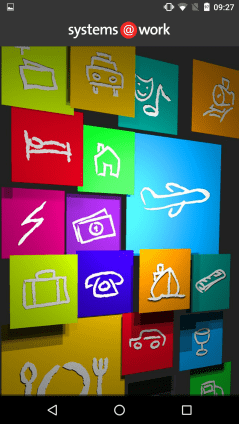
systems@work for Android

Share

We’ve just launched our systems@work App for Android mobiles, so (with a little configuration and an upgrade to the central server application) our users all over the world can connect to their company’s systems@work database and submit and authorise forms through their Android mobiles.

Screenshot_20160203-092716

It’s hard to find reliable statistics on relative market share for Android and iOS in the business sector (precisely those who might use time@work, expense@work or forms@work), but it’s clear that Android has won at least half the market, and in some areas of the world, much more than half. When, at a recent LLP Group company get-together, I asked my colleagues which of the two they use, a clear majority put their hands up for Android. A couple rather sheepishly owned up to Windows Mobile, but, with apologies to the two of them, for the moment I’ll ignore that opportunity. And the Blackberry one too.

At least Android phones can be cheap. When we reached the final stages of testing the Android version of systems@work a couple of months ago, I went out and bought myself one for just 40 GBP (with about ten minutes of free local phone calls thrown in to sweeten the deal). It took me some time to get used to the different style, but once I got inside our App it seemed like familiar territory and our App worked just as well. I was able to submit the invoice for the Android phone, as a legitimate business expense, using the App itself just twenty minutes after I bought it. (That’s logically equivalent to driving home a car salesman in the car he’s just sold you. Or something like that.)

Developing apps hasn’t been a painless experience. The problem for App developers is that the technical environment for App software is utterly different for iOS and for Android. And when it comes to Android you have the additional worry that you must make sure that what you’ve developed will work on the most ‘vanilla’ version of the operating system, because Android can be ever so slightly different on different devices. Apple’s iOS, on the other hand, is always the same (barring new versions).

So, App development is expensive. It took us more than a year to finish the iPhone version and around six months to complete the Android one. At least the web services that read and update the systems@swork database are the same for both Apps.

Our App is complex, though very simple on the surface. When you connect it to your systems@work database, it takes the forms that are defined there, and which are always very different for every one of our systems@work customers, and renders them in your mobile, together with all the lookup lists, date fields, numeric fields, and so on. that you need to fill in.

You can have as many forms as you like – for time entry, for expense entry (in local or foreign currency), for mileage calculation (with the distance between two place names or postcodes being automatically calculated by Bing if that’s what you need), for absence requests, for just about anything. You can photograph a receipt (or the Tower of Pisa for that matter) and record a voice memo. When you’ve finished entering data (online or offline) you can upload your transactions, photos and voice memos, to the server, sending forms for immediate authorisation or feeding the data into forms and timesheets that you can finish off in the browser.

Screenshot_20160203-113516

Screenshot_20160203-114309

I dream that one day there might be a single programming language that will work for both iPhone and Android, even if we’d then have to write a third version of our App. Stepan, our development manager, tells me that there’s talk in the technosphere about a new language or development environment called Swift that might solve just this problem. I look forward to it, but not tomorrow.

For the moment, and for some considerable time to come, we’re happy to have launched systems@work for Android as a separate App. It’s functionally identical to the one that works on an iPhone, so we’ll go on developing both in tandem, at least until we’ve finally caught our breath and have the stamina to begin again with Swift,

The Baptation of Scylla and Charybdis

Not an oratorio by Handel, but the christening of a friend’s sister’s twins, which I attended on Sunday in Mestre (the industrial horror you pass through just before you reach Venice).

baptation 2

A word on ‘baptation’. It’s a rather splendid neologism coined by a dim-witted Bulgarian friend of mine who has only a slender grasp of the English language, but the more customary English words, baptism and christening, couldn’t in any case do justice to the sheer extravagance of yesterday’s event. It began as a nearly interminable church ceremony, conducted in Romanian according to the Romanian Orthodox rite, and continued as a marathon knees-up at a restaurant in Padua (an event of which the twins, though present, will remember nothing at all).

As for Scylla and Charybdis, that’s what they were called (though probably only by me)before their baptism. Now they’ve become Madalina and Cristian.

I love ritual, at least as long as I’m aware of its dangers. It’s an essential component of many persuasive experiences, but it has the power to drag you in to any political, religious or military ideology. It can provide you with a (sometimes spurious) sense of belonging, whether that’s religious or only cultural. But it can numb the intellect, too, and it speaks most eloquently to the vulnerable. It wraps you up in nonsense, which may be consoling, even if also proscriptive.

baptation 3

Despite all this, ritual is the only component of religion that appeals to me, and I’ll go along with it, and be moved by it, even if the words are utterly nonsensical. Better, in this case, that the words be beyond reach, as they were yesterday, in Romanian. Ritual is a kind of performance art, and as long as you keep your distance from the dogma that comes with it, you can enjoy it more or less safely. The music, the lustre, these can be gorgeous. After all, we need something out of the ordinary to mark the big moments of birth, marriage and death.

Yesterday’s Christening was the second highly emotive, but incomprehensible event I’ve attended at a Romanian Orthodox church, the first, sadly at the other end of the spectrum, was the funeral of a young colleague who drowned accidentally in the Black Sea.

If you’re going to do something ritualistic, you might as well do it in spades. At the Mestre church we endured a two-hour service, complete with all the bells and whistles – incense, candles, flowers, music, chant. The twins were stripped and rubbed all over with olive oil steeped in aromatic herbs, then fully immersed in a zinc font of warm water. They were swaddled, brandished and laid on the altar steps (only the boy, though, was taken on a quick tour of that special place behind the iconostasis). There was further anointing, wrapping, unwrapping, and the service ended with a kind of processional dance around the font and, incongruously, suddenly the singing of Happy Birthday in Romanian. The priest also lectured us all, but with a special focus on the dozen or so godparents, on the ways in which Satan might interfere with the godly life, and listed a large number of ‘European’ sins to abjure, many of which I commit gladly and regularly. It was a relief to have understood little of it.

baptation 1

At the Moldovan restaurant in Padua, the party lasted from four in the afternoon until midnight. There were two servings of dinner to around sixty guests, with wine, cognac, speeches, dancing, cake, cash gifts from godparents to the children, braided bread and other presents being given in return. All through it, the twins slept peacefully, or just occasionally howled. The music, including the singing of a man who sang at Ilie and Svetlana’s wedding in Moldova, was completely deafening.

baptationhuddle

A Church of England christening would probably be over in half an hour or so, and afterwards you’d be lucky to get a cup of tea, a cucumber sandwich or a glass of sherry. The English make light of family joy and tragedy, preferring competitive sports and other hobbies. We keep our emotions tucked away somewhere out of sight until they can conveniently be forgotten. In any case, if it’s not done extravagantly, or emotionally, ritual is just an embarrassment Think of the watery rituals of the English Church and of the insipid Justin Welby.

Actually, there’s a lot to be said for the Moldovan way.

So, welcome to this world, Madalina and Cristian! Be good, but don’t listen to that priest.


Squash in Space

I woke up this morning thinking about competitive sports in outer space. It’s certainly something that will soon be exercising the best minds at NASA as they think about the social and psychological difficulties of long-distance space travel. Competitive sports are an essential part of human life, combining physical exercise, entertainment and the practice of good manners. On the long journey to Mars (and hopefully back) these would all be mission critical.

astronaut

Why these thoughts wandered into my semi-somnolent mind at 7 this morning, I don’t quite know, but it might be because I heard a snippet on the radio the other day about Ping-Pong at the international space station. I Googled ‘ping pong in outer space’ this morning and found this inspiring film of solo water Ping-Pong being played with hydrophobic bats:

Ping Pong in Outer Space

But it’s a serious question. What sports should astronauts play on their way to Mars?

The challenge, of course, is the lack of gravity. There’s no up and down, no floor, so any game that depends on something bouncing off the ground won’t work. Many games are defined as forbidding that a ball should bounce more than once. There is no ground in space, so rules of that kind simply couldn’t work. That rules out tennis, and squash, at least in its terrestrial form.

The concept of a table might, I suppose, be made to work, so Ping Pong (table tennis) is a possibility (though not with a ball made of water). I fear, though, that manoeuvring around a table in zero gravity would pose too large a constraint. In space, unless you’re holding on to something, there’s nothing to brace yourself against whilst swiping, so this makes movements harder to control. Every movement of a limb in one direction would be balanced by a movement of the body in the opposite direction. Being constrained by the single plane of a ‘table’ would make a game too hard to play.

I see difficulties with football too, since giving primacy to the foot in the absence of a floor and of gravity, would surely be physically too difficult. Imagine playing football in a swimming pool.

Golf needs more space than NASA could afford. In addition, I can’t see how the ball would fall into the hole, or roll for that matter, or ever stop. Nothing would hold a ball to a surface, so friction wouldn’t do its usual thing of slowing movement down.

Cricket can’t satisfactorily be played without a substantial team, and needs umpires. You’d also need a spherical field, in three dimensions, and a large one. What would be the difference between a six and a four?

Better, in my view, to adapt the game of squash. Squash involves bouncing the ball off surfaces, including, but not limited to, a floor. All you need to do is to abolish the idea of the floor completely, allow unlimited bounces, face players against each other at either end of a triple-cube space, with small square ‘goals’ let into the centre of each end wall. A racket or paddle would be easy enough to wield. It would be a vigorous, skilful game.

The only challenge, though, would be to enable players to brace themselves against something (the wall) in preparation for a leap and swipe. If you were to let handles into the walls of the court you could no longer rely on a clean bounce in all circumstances, and that might lead to fractious behaviour. No, I think magnets would have to solve the problem. Make the walls out of steel and place some strong magnets in the fabric of the astronauts’ attire (in their shoes, shoulder pads and sleeves). They would have to be strong enough magnets to allow each player to cling to the wall, but not so strong as to prevent escape.

I played squash myself until recently, but gave it up when my Achilles tendons could no longer bear the strain created by mild overweight and gravity. In space I wouldn’t have problems of that kind. A new sporting career beckons. I will apply to NASA forthwith.

Keeping Up Appearances

Share

Fashion can catch up with you without you even noticing it, until suddenly it’s nearly too late. I don’t mean skinny jeans, or leg warmers, or platform heels or first press extra virgin olive oil. Rather, I mean the way that software should look. What was modern and attractive five years ago looks worn and dated today.

Fashion creeps up on you gradually. At first there’s just a murmur, but as the years go by you hear it more and more – yuk, that’s not a very attractive interface! You ignore the criticism for a while, thinking that what software actually does is far more important than how it looks, but you’re foolish if you go on doing that for long. The problem is, of course, that it takes more than a few days to redesign and rewrite the surface layer of business software.

There’s also the issue of devices. We may still do most of our work on PCs or Macs but at times we’ll reach for our mobiles and tablets to do serious things there too. So interfaces must nowadays use responsive design techniques, so that a webpage will rearrange itself to suit the device it’s running on.

systems@work is a software author. We’ve developed a professional services management system – time@work , an expense management system – expense@work, and a forms workflow management systems – forms@work. All are different ways of configuring the same underlying systems@work software. It’s mostly browser-based software that runs on any browser with some configuration work managed through a back-office desktop tool.

We’ve been successful. The UK’s MPs use our software to record their Parliamentary expenses (we’re the solution not the ‘scandal’ that happened seven or so years ago). Consulting, IT, legal, pharmaceutical, financial, NGO and software development firms use our software all over the world. We have more than 40,000 end-users.

This is the browser Home Page that our current users use and love:

home1

Yuk?! Well, not entirely. The options available to the user are clearly laid out in sections related to the functions of the system. Everything is more or less one click away. I hardly notice the interface when I do my timesheets, expenses and run my reports. And that, perhaps, has been the problem. I’m so used to it I haven’t noticed that by today’s standards it’s a bit dull and out of date.

I’m the software designer and I’m confessing that in this respect we’re not up to scratch because now that we’ve released Version 5, we’re working on a redesign, hoping to release Version 5.1 in about three months’ time.

We’re changing buttons, fonts, and other bits and pieces, but the big changes will come in the way the system can be navigated.  As well as adopting a more fashionable style, we’re going to ‘advertise’ the system’s options more noticeably and provide configurable shortcuts to diaries, skills databases, and reports. And instead of scattering notifications of things you’ve got to do across the page, we’ll list tasks, upcoming consulting allocations, and news in one easy to read ‘Today’ tab.

The Home Page is going to look more like this.

newhome2

I think it’s better, but it’s work in progress, and I’m open to suggestions.


Paradise Regained

Some of my best friends are gardeners and I suspect they have a inkling of a paradise that I haven’t yet perceived. They are (the four that I’m thinking of) utter paragons of patience, in balance with nature, creative, knowledgeable, and humble in their understanding of and acceptance of human limitations. Or, at least, they’ve started towards that path. Gardening, I suppose, is partial dominance, partial submission, the perfect spiritual exercise.

My own fingers are pink, not green. I have a sense of when my houseplants are thirsty, but I can’t do any of the outdoor stuff. Perhaps it’s because I was never taught. My father loved both gardening and fishing (another exercise in tranquil, and usually unproductive, inactivity) but he loved order and control more than untameable natural growth. In his frustration at the wilfulness of nature he would usually pave the whole thing over with concrete slabs.

Nevertheless, I envy my friends’ ability to converse in horticultural Latin (one of them will shortly write a book on the subject), their assiduous visits to Great Dixter and Sissinghurst (where they might surreptitiously snip), their attendance at the Chelsea Flower Show, their membership of the Royal Horticultural Society, their trays of seedlings, their trowels and muddy boots. I do not belong, but I dream that one day, perhaps, even I might retreat from the city and the noise, to follow the advice of Roman poets and French satirists and cultivate my garden.

This tantalising other way of life is on display at the Royal Academy in London at an exhibition called Painting the Modern Garden – Monet to Matisse. It’s mostly Monet (1840-1926), or, rather, at its best it’s Monet, the last room given over to a triptych of Water Lilies painted by the artist in his last years, and never before seen together in Europe at a public exhibition. Refusing to leave the garden he had created and painted at Giverny, even as the Germans advanced into France, he stayed and continued to plant and paint. His was a creative double act (first the garden and then the painting of its beauty) and at the end of a long life, despite the horrors of war, he chose to paint only his garden, with ever greater concentration and abstraction, in consoling celebration of what he valued most – the human sense of beauty.

lillies

On a January day in London there’s no better solace I can think of than this exhibition. Whether they are Pissaro’s vegetable plots, Van Gogh’s squirming shrubs, or Klee’s geometric distillations, these paintings are all glimpses of another, usually better, life.

I visited the exhibition with Caroline, one of my four keen horticultural friends. Her knowledge is encyclopaedic and she soon pointed out an error on one of the captions to a Monet.

‘That’s not a something iris,’ she said. ‘It’s a something else iris.’ (I can’t reproduce the Latin terms.)

Gardening is her passion, so it was with some difficulty that I prevented her from making a correction to the caption, or the painting. So much for the spiritual plane.

When a man sits down in front of a garden, or strolls around in it, he steeps himself in delight. Because the garden is a paradise where a garden owner and a landscape gardener share the same dream in their common culture. Man first made a garden to try to produce a paradise in this world. The garden seems to be a paradise of the other world, somewhere out of sight.

Masaaki Noda, Dialogue with a Garden

Trumped by his own petard

I don’t usually take pleasure in others’ disappointment, but what a relief to see that Trump has been trumped by Ted Cruz at the Iowa Caucuses. In his concession speech there was a welcome hint of bubble burst, of bluster fallen flat. Not that Ted Cruz is my cup of tea, either, but he’s a more or less civilised and rational man by comparison.

Trump is entirely ridiculous, nothing more than a self-obsessed demagogue, streetwise but foolish, and I would think it a danger for the world if he were elected President.

trumped

Three cheers, though, for Hillary Clinton’s winning of the Democrats’ Caucuses. I want to see her in the White House. She is described as a ‘flawed’ candidate, but who is not?