If I hear another bloody tango…

…I’ll go mad. I was in Buenos Aires last week, and I couldn’t get away from them.

tango

Just imagine, instead, that you’re in London and wherever you go, in every café and restaurant, on every street corner, there are Pearly Kings and Queens doing their cheerful Cockney thing, bawling out ‘Down at the Old Bull and Bush…’. You’d want to die.

pearly royalty

Or that you’re in Vienna and the waltzing just goes on and on.

waltz

Or in Dublin, and Michael Flatley’s Riverdance hordes are bearing down on you with those awful foot-banging Irish dances.
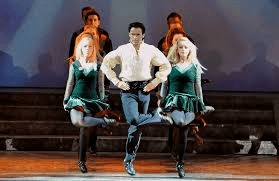
riverdance

Or in Wales and there’s a male voice choir singing ‘Bread of Heaven’ from every mountain top.

welsh

All of these tiresome celebrations of national culture (and we can all think of dozens more) should be abolished or very severely restricted (only between 11 am and 4 pm, for example, on the last Thursday of the month, and never in front of children). These national clichés hold their nations back. They come to define a country and blind us to its other virtues.

It’s time for these anachronistic curiosities to be abandoned. Buenos Aires must outlaw the tango, and move on less gracefully. It’s not as if it’s the only thing they’ve got to celebrate. They’ve got beef, Evita, financial crises, and new world wines. Vienna has horses, stollen and Mozart. Ireland has writers and Guinness. Wales has a lovely accent. Every country’s Tourist Board should carry out an annual, unsentimental cull, ridding us of whatever sits at the top of its list of nation-defining delights. They have delighted us long enough.

I write this after an excruciating evening of tangos in a nightclub at an upmarket hotel in Buenos Aires. It was dinner followed by a show in a room that resembled a tart’s boudoir (I’ve never been in a tart’s boudoir, but I’ve seen them in films). Red plush velvet, prim pin-cushion chairs that were agony after ten minutes, and darkness. There was hardly sufficient light to eat by.

It was a very long haul indeed from 8.30 pm until the show began at 10.15 pm (though the food was good) and I promise that, even so, I approached the show with an open mind. But after five minutes of the artificially heightened drama of five couples tangoing furiously in 1920s fashions, I was more than ready to turn my face to the wall. Tango, it seems to me, is just sulking on legs. It may take two to tango, but it’s usually only the lady who’s doing the sulking. If I were her partner I wouldn’t put up with it for more than a minute. For some reason, though, he always does, and in the end she always bends to his will. You see, it’s sexist too.

The skill, judging by the occasional applause, lies in the intricate twirling of the legs, which can be astonishingly rapid and complicated, even if utterly unnecessary. The truth is that an interest in ladies’ legs is a prerequisite if you’re to enjoy a show such as this. I see now that it must have been precisely the twirling of ladies’ legs, even if by pouting and sulking East Midlands Latin American wannabes, that attracted my father to Come Dancing, the BBC’s TV dance show of the 1970s. I was fonder of Match of the Day, perhaps for a similar reason. But each to his own.

On top of everything else, the violinist was out of tune.

So, that was the last tango for me.

Not Even for Ready Money

Buenos Aires has the ‘perfect amount of chaos’ according to our guidebook. It’s an odd idea, but I understand it. I suppose Singapore, by contrast, though its rulers couldn’t in a million years appreciate the concept, has a very imperfect amount of chaos – none at all. I prefer a little scruffiness, and the feeling that I’m not a disappointment to the city I’m visiting, and I like the sense that things might change in uncertain ways. I like a smidgeon of trivial civil disobedience, too. There’s also a perfect amount of graffiti for a city, which, again, is a little more than none at all. Order and complacency are death to the human spirit and order should be striven for but never attained.

Buenos Aires is an impressive, scruffy, lively, city, and if you’ve been to those Latin American cities where chaos dominates (I’ve been to Mexico City, Caracas, Sao Paulo and Rio de Janeiro) you’d be forgiven for imagining yourself in a slightly improved Spain (Argentine gastronomy doesn’t involve tapas). And until yesterday morning, I was blissfully unaware of anything that might spoil the party, such as the much talked about economic ills, or their causes.

DSC02532x

Argentina has suffered serial military dictatorship, and serial financial crises, the one, perhaps, the cause of the other, and vice versa. The country has defaulted twice on its international debts in the last decade or two. It’s hard to understand why the country shouldn’t in fact be spectacularly prosperous, given its natural resources, but on yesterday’s evidence I’d say that there’s much too much regulation and far too many vested interests, and whether these are the interests of landowners, the military or the unions, all of them are stifling progress. The country celebrates 200 years of independence this July, but I doubt there’s been a decade of political consensus in all that time.

In view of the recent financial crisis, we were told by our travel agent to travel to Argentina with wads of dollars, but this advice turned out to be out of date. The Argentinian peso has floated freely since December, so you no longer need to change your dollars on the black market to make the fun affordable. Actually, no one wants your dollars anymore, except the hotel receptionist at an outrageous rate, and some rather dubious creatures who lurk in tourist hotspots. Most people would rather take pesos. That, of course, would be all very well were it possible to get hold of some. One of the biggest problems in Argentina is that the banking system isn’t fit for purpose, at least not fit for the purposes of the tourist.

ATMs don’t usually work. My success rate with a Visa debit card issued by a reputable UK bank (well, RBS) has been about one in ten. The pesos we got on Sunday were running out by Monday morning, and with everyone back at work, every ATM in the city was mobbed, and most of them were empty of cash (who knows why!). I tried dozens of them. Easy, you might think, just to change some of those dollars into cash at a bank or exchange office, except that banks are allowed only to carry out exchange transactions for their customers, and exchange offices, such as tourists use, are few and far between.

After three hours of punching numbers into ATMs, without success, and advised by a pleasant cashier at a branch of Citibank, we took a taxi ride to the city centre, to an official ‘casa cambia’, where, without passports, we were still unable to obtain any pesos (they must see your passport to determine that you are foreign and haven’t exceeded the permitted 90-day period during which you may exchange foeign cash for pesos). And then, miraculously, at a branch of HSBC an ATM finally coughed up some ready money.

DSC02714x

It all took three hours, so it was afternoon before we could do anything rewarding. Perhaps Argentina is one of those countries where the population wastes half its time dealing with entirely unnecessary problems, as in Eastern Europe before the Wall came down. We visited MALBA, the Museum of Latin American Art of Buenos Aires, a beautiful building and a mercifully small but delightful collection.

DSC02673x


NOT in Search of Eva Duarte

Why would two highly-educated, cultivated British men drag themselves half way across Buenos Aires to visit a cemetery?

Obviously not because Eva Duarte, otherwise Eva Peron, or Evita, might be buried there. I have absolutely no interest in celebrities, living or dead, and loathed the Andrew Lloyd Webber musical (though I did enjoy seeing Budapest double for Buenos Aires in the film version, when I wasn’t cringing at the utterly ghastly antics of Madonna). Our visit,, naturally, would have much more to do with an academic interest in funerary customs and monuments. Indeed, to bolster that claim, I should point out that I once won an essay prize, at the age of sixteen, for an article on the Municipal Cemetery of Milan, a gloriously extravagant graveyard as different from an English one as HIgh ‘Smells and Bells’ Catholicism from plain bread-and-water Puritanism. And I’ve spent many happy hours in the Cities of the Dead in Cairo, where some of the most wonderful medieval mosques are to be found. I’ve also crawled through the catacombs in Rome. And I’ve twice visited the grave of Igor Stravinsky, my favourite composer, on the cemetery island of San Michele in Venice. I have a history, and of course I will have a future too, as we all will.

In any case the cemetery was conveniently located on the way back to our hotel in Palermo Soho, the ‘in’ suburb of Buenos Aires where all discerning tourists now stay, and it was just the way to end a joyous day – a suitably cautionary contrast to the fun of the flea market in Santelmo (quivering to the music of Astor Piazzolla) and the grandeur of Plaza de Mayo.

It wasn’t all that easy to find, though. An elegant middle-aged lady with perfect English found us poring over our map on a street corner in upmarket Recoleta.

‘We’re looking for the cemetery,’ we said.

‘Ah, you’re going to see the grave of Evita Peron,’ she said.

‘No, certainly not that,’ I said.

‘Then why would you go there?’ she asked. ‘Half my family is buried there, so I really can’t imagine going there for pleasure.’ She seemed to shudder.

‘Well…..’ and then I spoke eloquently about funerary customs and monuments.

We moved on rapidly to happier topics, and in no times we were chattering about Leicester, where her son-in-law plays top-league Rugby, and then, of course, about the awfulness of the English weather.

The cemetery, when we finally got there, was indeed interesting. It reminded me of Pompeii. Long streets of small houses, all of their inhabitants dead. And it was a conveniently condensed architectural microcosm of the city – neo-classicism, Beaux-Arts, art deco, and even a hint of modernism about some of the more recent dwellings.

cemetery2x

Our guidebook mentioned that Evita’s grave was amongst the most humble. She was, after all, a determinedly humble megastar, and never forgot her roots. Even when her husband attained the highest office in the land, she was never happier than when handing out shirts to the shirtless and bread to the poorest of the poor. But we weren’t looking for her grave anyway.

There weren’t very many tourists, so we kept coming across the same groups as we criss-crossed the maze of cemetery high-streets and low-streets. None of them was looking for the grave of Eva Peron, except for an American couple (he, a plastic surgeon, perhaps in search of body parts for reconstructive surgery) who wondered, idly, where her grave might be found.

cemeteryx

‘Well, since we’re here,’ they pointed out, ‘It would be silly not to see it.’

‘We’re not looking either,’ I said.

We wandered on, glancing now and then, with idle curiosity, at the family names adorning each mausoleum, and finally found our way towards the exit, entirely satisfied. We came across the Americans again, also just about to leave. None of us had noticed it before, but there was actually a very helpful map that showed exactly where Evita’s grave could be found – number 88 in quadrant C7.

‘Well, we might as well,’ we all agreed, ‘since we’ve come so far.’

So we did, and it was thronged with Asian tourists. Pointless of course, if you have no interest in celebrity, but since we were there.

Here she is:

evaperonx