Hocus Pocus – Religion and Nonsense

I usually start the day in the laziest imaginable way, first, by not getting out of bed for at least half an hour after my alarm has sounded, and then by watching BBC Breakfast. I’ve recently acquired something called IPTV and so the BBC’s UK-only channels can be piped directly to the TV in my sitting-room.

biscuit

Breakfast television is pap, a cocktail of undemanding topics and mild jocularity. It goes well with a hot shower, a cup of tea and a biscuit called a Morning Tea Finger (see above). But my ears pricked up the other day when the subject of religion came up (you’d think that would be no-go before about lunchtime). It was prompted by a report that had just been published by some august institution, though I can’t remember which (you see, I don’t really pay attention). Apparently, more than half of the UK’s population now describe themselves as non-religious.

‘Worse than that,’ one of the invited commentators said, ‘Fewer and fewer are going to church, temple, mosque or synagogue.’

WORSE THAT THAT?!

WORSE???!!!

I would think it’s cause for celebration, myself. At least for those of us, like me, who can’t bear the posturing and utterances of most religious figures (consider the sanctimonious antics and unctuous, oleaginous tones of Justin Welby, the Archbishop of Canterbury). It’s all hocus-pocus to me, nonsense, superstition, and it’s socially retrogressive too. I can’t understand how anyone can be taken in by it.

I describe myself as ‘culturally Christian’. That’s not something I can undo since it’s the context I was born into, but I’d as happily be ‘culturally Buddhist’, or ‘culturally Moslem’, ‘culturally Hindu’ or ‘culturally Jewish.’ I don’t know that these ways of being would actually be very different from one another. Most religions recommend compassion as a good way of getting started. But I’m not sure about ‘culturally Jehovah’s Witness’ since it’s not so clear to me what that would mean (I certainly wouldn’t reject blood transfusion or refuse the companionship of non-Witness folks). If religions were biscuits, the Church of England would certainly be the Morning Tea Finger. It’s a relatively tolerant and innocuous biscuit.

I am all for atheism. I enjoy ‘religious’ moments at the top of mountains, in the naves of great Gothic cathedrals and in the middle of great symphonies, just as anyone does, but let’s not let moments of contemplation and awe get churned into dogma. Frankly, I can’t understand how you can ever get from what one might loosely describe as the ‘spiritual’ (without any other-worldly implications) to a fat book of rules such as the Catechism.

But religion doesn’t necessarily place my friends and family quite beyond the pale, though I find it a challenge, the more so when it affects their opinions and actions. For example, there’s a branch of my family that’s staunchly Jehovah’s Witness and they are the kindest of all. I have a niece who is fanatically Roman Catholic and a nephew who is falling prey to Russian Orthodoxy but I won’t entirely reject them. Frankly, though, it’s hard to know what to do or say. There’s a part of me that insists they must be stupid to believe the nonsense that they do, and yet they’re not stupid. And some of my best friends are religious too (well, a small few of my friends).

It wouldn’t trouble me at all if I didn’t also believe that nonsense, in the long run, does harm.
Nonsense – More Meaningless Drivel from the Art World

I am grateful to my brother for forwarding to me this particular piece of nonsense. The text comes from publicity material for an exhibition in Porto, Portugal. It’s an example of the pretentious and meaningless rubbish that pretentious and intellectually vacuous museum curators and art critics will write, if asked or paid. It makes no sense at all, as far as I can see, and I don’t see how it could possibly be of use to a visitor, or for that matter, attract a single visitor to the exhibition.

clouds

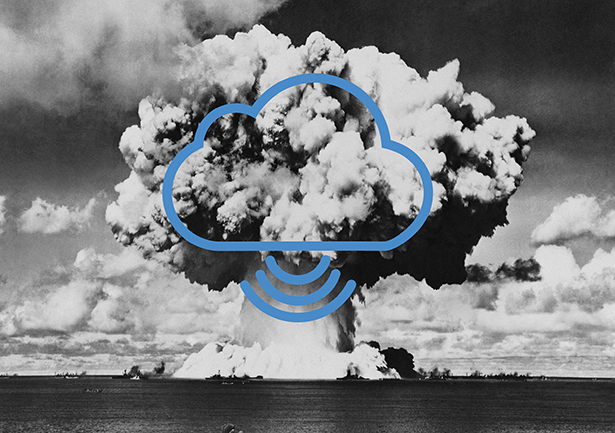
Since the second half of the 20th century, we have lived under the shadow of two clouds: the mushroom cloud of the atomic bomb, and now the “cloud” of information networks. How did the metaphor of post-war paranoia become the utopian metaphor for today’s interconnected world? Under the Clouds confronts the interrelated effects and affects of these two clouds on life and work, leisure and love, and on images, bodies, and minds. If the mushroom cloud represented the potential annihilation of human civilization, the “cloud” is the diaphanous representation of the network-driven, information-saturated conditions in which we increasingly live. We are assailed with the effects and affects of the cloud; data overwhelms us with needs, demands, and sensations. Information floating in the cloud—where data is now increasingly stored and controlled—replaces the invisible threat of radiation, moving through apparently unseen yet pervasive ways. The singular image of the cloud, unseen yet floating above us, stands for everything from the abstractions of the financial system, to the increasingly mediated character of our social relationships, the role of algorithms, and the affects of liking and sharing. In these ineffable clouds lies the phantasmagorical nature of our contemporary sublime.

The information technologies of the nuclear era have now evolved to fit in the palm of our hand; we no longer merely look at images, we now touch, scroll, pinch, and drag them. Where is the border between the self and its data shadow, between information, memory, and knowledge? The biological, economic, and political effects of living under the clouds have taken the form of new relations between data and material; screens, images, and things; and the changing nature of sex and work. As earlier forms of technologically inflected art sought to mitigate the effects of rapid change—both on perception and society—many of today’s artistic practices confront the myriad interfaces and decentralized networks that continue to shape and transform daily life, forming new evolving connections between bits and atoms.

This must have been written by Joao Ribas, curator at the Serralves Museum. He’s a prize-winning curator. Such prizes, no surprise, are awarded by curators to each other.

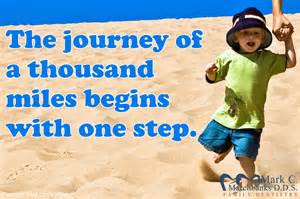
A Journey of a Thousand Miles Begins with One Step

I was thinking of this loathsome cliché when I was bicycling in Hungary a week or two ago. (Apparently it’s one of the sayings of Confucius.) Each day in the saddle began with a first and easy revolution of the pedals, and then another 40,000 or so, every one a little more difficult than the last. I can’t say that this glib little saying, which kept coming to mind in the most irritating way, offered a moment’s consolation, knowing that I had another 85 km to go. I can assure you that it’s the last ten thousand that make a journey difficult, not the first.

A single step

Yes, I do understand what this silly truism is trying to say, but I just don’t find it inspiring.

  • If it’s saying that a journey is easy because it’s just a lot of little steps, then that’s obviously untrue. Difficulty has to do with the total number.
  • If it’s saying that you can begin a long journey without a commitment to completing it (because it’s pretty easy to give up after the first step or two) then that’s not encouraging either, and not always true.
  • If it’s saying that you can begin a long journey without knowing where you’re going, then that’s patent nonsense. A long journey needs a good plan and the determination to complete it.
  • If it’s saying that you should begin a journey without thinking of your final destination, then that’s foolish.

If setting out to do something valuable depends on your assenting to this cosy platitude, then I would question your motives.

Imagine Winston Churchill in May 1940 wondering whether to fight on and resist the Nazi domination of Europe.

‘I’m in two minds,’ he might have said, swigging a tumbler of brandy. ‘Can we really take on the German juggernaut or shall we make a coward’s peace?’

And someone lowly but presumptuous raises a timid hand and says, ‘Mr Churchill, just remember, a journey of a thousand miles begins with one step.’

‘What a splendid thought. Never occurred to me. We will fight them on the beaches…..’ And so on. And the wheels of history turned the way they did.

Not likely!

The fact is that a journey of a thousand miles usually ends with exhaustion and not always where you wanted to be, even if it’s a worthwhile trip. Let’s not pretend otherwise.

Here’s some similar-sounding silliness that’s equally banal:

  • A large number begins with a single digit
  • The longest novel begins with a single word
  • The most potent drink begins with a single sip
  • The biggest explosion begins with a tiny spark
  • Death begins with your very first breath
  • Idiocy begins with a single small cliché
  • Obesity starts with a single grain of rice
  • A journey by train begins with the purchase of a ticket

…and so on.

Yuk!

Reach for the sick bowl.