If I hear another bloody tango…

…I’ll go mad. I was in Buenos Aires last week, and I couldn’t get away from them.
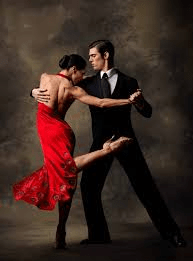
tango

Just imagine, instead, that you’re in London and wherever you go, in every café and restaurant, on every street corner, there are Pearly Kings and Queens doing their cheerful Cockney thing, bawling out ‘Down at the Old Bull and Bush…’. You’d want to die.

pearly royalty

Or that you’re in Vienna and the waltzing just goes on and on.

waltz

Or in Dublin, and Michael Flatley’s Riverdance hordes are bearing down on you with those awful foot-banging Irish dances.
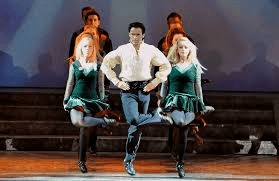
riverdance

Or in Wales and there’s a male voice choir singing ‘Bread of Heaven’ from every mountain top.

welsh

All of these tiresome celebrations of national culture (and we can all think of dozens more) should be abolished or very severely restricted (only between 11 am and 4 pm, for example, on the last Thursday of the month, and never in front of children). These national clichés hold their nations back. They come to define a country and blind us to its other virtues.

It’s time for these anachronistic curiosities to be abandoned. Buenos Aires must outlaw the tango, and move on less gracefully. It’s not as if it’s the only thing they’ve got to celebrate. They’ve got beef, Evita, financial crises, and new world wines. Vienna has horses, stollen and Mozart. Ireland has writers and Guinness. Wales has a lovely accent. Every country’s Tourist Board should carry out an annual, unsentimental cull, ridding us of whatever sits at the top of its list of nation-defining delights. They have delighted us long enough.

I write this after an excruciating evening of tangos in a nightclub at an upmarket hotel in Buenos Aires. It was dinner followed by a show in a room that resembled a tart’s boudoir (I’ve never been in a tart’s boudoir, but I’ve seen them in films). Red plush velvet, prim pin-cushion chairs that were agony after ten minutes, and darkness. There was hardly sufficient light to eat by.

It was a very long haul indeed from 8.30 pm until the show began at 10.15 pm (though the food was good) and I promise that, even so, I approached the show with an open mind. But after five minutes of the artificially heightened drama of five couples tangoing furiously in 1920s fashions, I was more than ready to turn my face to the wall. Tango, it seems to me, is just sulking on legs. It may take two to tango, but it’s usually only the lady who’s doing the sulking. If I were her partner I wouldn’t put up with it for more than a minute. For some reason, though, he always does, and in the end she always bends to his will. You see, it’s sexist too.

The skill, judging by the occasional applause, lies in the intricate twirling of the legs, which can be astonishingly rapid and complicated, even if utterly unnecessary. The truth is that an interest in ladies’ legs is a prerequisite if you’re to enjoy a show such as this. I see now that it must have been precisely the twirling of ladies’ legs, even if by pouting and sulking East Midlands Latin American wannabes, that attracted my father to Come Dancing, the BBC’s TV dance show of the 1970s. I was fonder of Match of the Day, perhaps for a similar reason. But each to his own.

On top of everything else, the violinist was out of tune.

So, that was the last tango for me.

No Room in Vienna

It’s hard to find a hotel room in Vienna these days, at least at an affordable price. When I paged through Trivago‘s meagre and unaffordable offerings two weeks ago (a rip-off rate of 300 EUR for an airport Novotel, for example), I wondered what on earth could be going on in the city, especially on a Friday night. Car show, business conference, political summit, Star Trek convention, Vienna Marathon, Madonna, Kylie or Shirley Bassey in town?

All my partner and I needed was somewhere simple for eight hours’ sleep between an evening train journey from Prague and a morning flight to Dubrovnik. Not worth paying 700 EUR for the splendid Hotel Sacher, I thought, however stylish it might be. Who wants to pay a lawyer’s hourly fees for just eight hours of bed and breakfast.

Foolish of me not to realise it was part and parcel of the refugee crisis, as the receptionist at our hotel (more like a hostel, really) explained. I’m still dubious, because you don’t really think of refugees booking hotel rooms, but perhaps the lower-cost end of the market is saturated and there are only four-star and five-star rooms left for regular travellers. Being a refugee from a dangerous country doesn’t necessarily mean you can’t afford to sleep in a hotel. The huddled masses at Vienna’s main railway station, however, suggest that many, perhaps even most, still sleep rough.

There weren’t any rooms left anyway at our hotel, even if they did have the wherewithal. In the ten minutes we spent at Reception checking in, at least two groups of people came looking for rooms. I have no idea if they were refugees. In any case there was no room at our inn, not even for ready money.

pylone

Asking for high prices seems extortionate in the circumstances. In this situation ‘revenue management’ (the clever way in which price is continuously adjusted to reflect demand) might almost be described as ‘racketeering’, but it’s the way the West works. Supply and demand, and market prices. How could it be better arranged?

At the railway station the next morning, bound for the airport, we came across crowds of migrants queuing for cigarettes, washing facilities and food. In the same concourse there’s one of those pretty Pylones shops (there’s one I visit regularly in Portobello Road just before friends’ birthdays), an Aladdin’s cave of delightful, ingenious, imaginative and colourful things that no one actually needs. No queue of migrants there, of course, but a few shoppers nevertheless browsing for things that might tickle a decadent fancy, their basic needs no doubt already met (though our breakfast at the hostel/hotel was conspicuously poor). Not that these are luxury items. It’s not Prada. But they are in no way necessary.

A starker contrast is hard to imagine. I suppose we should hope that somewhere, someday, these refugees will be fully paid up and prosperous members of our Western European club, able to buy such discretionary items, driven by desire rather than necessity, as we are most of the time.

The Iron Curtain – Then and Now

How things have changed, and yet not at all.

I took the train from Budapest to Vienna on Friday for the first time in about twenty years. When I first lived in Budapest in 1987, the city was still behind the Iron Curtain, and it was a journey I made regularly, especially in the winter, to get away from the greyness of Budapest to the colour, culture and sophistication of Vienna, not to mention the nightlife. Passengers were few and the journey took more than four hours. Eastern Europeans, as they were then called, couldn’t travel without an approved purpose and a visa, and foreigners living in Budapest were very few.

It took nearly half an hour (and the stamping of half a dozen documents) to buy a ticket at the railway station in Budapest, and when the train stopped at the border it might take up to half an hour for the border guards to make their sweep of the train. Suspicion abounded, and I was often the focus of it.

iron curtain

On Friday last week, it took me just one minute to buy a ticket (though, admittedly I waited 30 minutes in the queue with dozens of other eager travellers) and the journey was scheduled to take only three hours. The train left on time, was full, and stopped for just a few minutes at the border. After all, we were all travelling from one Schengen state to another, and in theory passports aren’t required.

But suspicion still abounds, albeit of another kind. As the train left Budapest Keleti Station hordes of a new generation of police (no more polite than the Communist-era variety, but nowadays multi-lingual) swept through the train, demanding (often very aggressively) that anyone ‘suspicious’ (which in their book meant anyone of any colour other than white) should show his or her passport. I sat in the restaurant car with a middle-class Singaporean family (probably ‘ethnically’ Indian). I didn’t have to show my passport, but they had to show theirs. About ten passengers were then removed from the train before we reached the border.

I suppose that what I saw was the EUROPEAN IMMIGRATION PROBLEM at first hand. Hungary has recently and unilaterally adopted an aggressive attitude, though why this means preventing them from leaving the country rather than letting them go, I do not know.

We are back where we were. Borders still matter. If the government of Hungary can get away with it, there will be a new physical Iron Curtain soon on the country’s border with Serbia.

Is it a TGV? Is it an ICE? No, it’s the Railjet!

An average speed of 94 km/hour to Vienna and back may not sound exciting to those who sit smugly on the Eurostar and average 250 km/hour between Paris and London. But it’s pretty impressive in former communist Eastern Europe, where the cost of upgrading the line to TGV capability is prohibitive.

True, it’s only three times faster than a good sprinter, such as Usain Bolt, but he runs a shorter distance, and probably couldn’t keep up the pace for as long as 12 hours.

I took the new RailJet service from Prague to Vienna and back last week. It takes only four hours and ten minutes each way, in comfortable, modern carriages. It’s a shame there’s no WiFi, but there are power sockets between the seats, screens that tell you where you are and how fast you’re going, a nice modern smell of new carpet, and a smart restaurant serving utterly unpalatable food (but that’s a matter of taste, I suppose).

IMG_1772

IMG_1773

Many things are getting better. And to cap it all, there’s a fabulous new railway station to enjoy on arrival in Vienna..

IMG_1775 IMG_1777

It’s an easy day-trip to Vienna and back, now, no longer the exhausting, rattling, shabby horror trip it once was. But the old dining-car certainly did a better breakfast.